

The 7 Steps of the Procurement Process: A Practical Guide for Manufacturing Teams


Importance of Procurement in Business
Every product you’ve ever built started with a decision someone else made about a part they’d never touch. That’s procurement. It’s the least visible function in manufacturing and one of the most expensive to get wrong.
Get it right, and the factory keeps running, costs stay predictable, and a new supplier becomes a five-year asset. Get it wrong, and a single missed lead time on a connector or a chipset can stall an entire production line. The 7 steps of the procurement process exist because good sourcing is not instinct. It is a clear sequence. Skipping a step is usually where trouble starts.

“The necessity of establishing a strategic supplier risk management program has never been more critical.” Andrea Greenwald, Senior Director Analyst, Gartner
Overview of the 7 Steps
The process has seven stages. First, identify needs. Next, do market research. Then, build a procurement strategy. After that, request proposals. Review the proposals. Negotiate contracts. Finally, implement the plan and monitor it ongoing. Each step below covers what it involves, where teams typically stumble, and what a stronger version of that step looks like in practice.
Step 1: Identify Needs
Procurement starts before a single supplier is contacted. It starts with a clear answer to, “What do we need, and why?”
Vague specs are the most common mistake at this stage.
They are also the most costly. A request for “a reliable enclosure supplier” gives a sourcing team nothing to act on. A request for “an IP54-rated enclosure supplier who can hit 50,000 units a year with a 6-week lead time” gives them a brief.
Understanding Supply Chain Optimization
Supply chain optimization isn’t a step you take later – it’s a lens you apply here, at the point of need. Before you decide what to buy, define how it fits your supply chain.
Consider single-source risk and geographic concentration.
Think about how a delay at this supplier would affect downstream suppliers. Teams that treat this as a Step 1 question, not a Step 7 fix, spend far less time firefighting later.
Setting Inventory Management Goals
Needs identification should also define the inventory rules for what you buy. Set safety stock levels and reorder points. Decide if the part is critical enough to justify dual sourcing. A component with a 20-week lead time and no substitute needs a different inventory plan. A common fastener is easier to buy. You can get it next week from many suppliers. Deciding that now saves a renegotiation later.
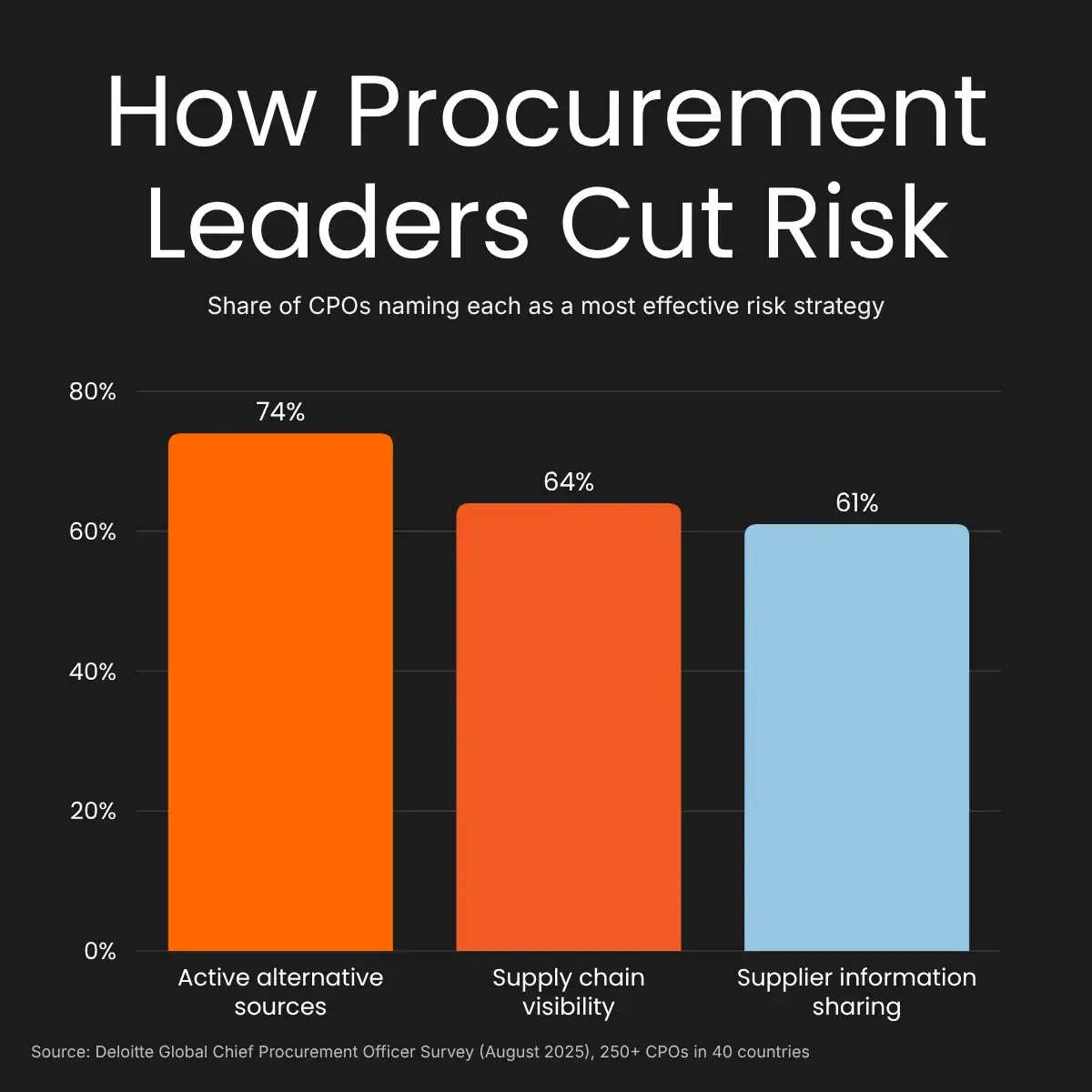
“Supply chain footprints are evolving, with 73 percent of survey respondents reporting progress on dual-sourcing strategies.”
Step 2: Conduct Market Research
Once the need is defined, the question shifts to who can actually meet it – and at what cost, quality, and risk. Market research at this stage isn’t a formality before you pick a “usual supplier.” It’s where you find out whether your usual supplier is still competitive.
Demand Forecasting Techniques
Good market research runs alongside demand forecasting, not after it. If your volumes will double next year, don’t judge suppliers only for today’s order. Judge them for the capacity they must build. Pull forecasts from sales pipeline data and past seasonal trends when you can.
Stress-test any supplier shortlist against your most likely volume scenario, not just today’s.
Evaluating Potential Vendors
This is the point to build a genuine long list, not just call the three vendors you already know. Evaluate more than unit price: Consider certifications like ISO 9001, IATF 16949 for automotive, and ISO 13485 for medtech. Review financial stability and geographic footprint. Most of all, check how they handled past supply disruptions. A vendor with a clean track record on paper and no history of managing a shortage is an unknown quantity, not a safe bet.

Procurement leaders deliver nearly two times higher total shareholder return and 33% higher average margin. Kearney, Assessment of Excellence in Procurement
Step 3: Develop Procurement Strategy
With research in hand, the next step is deciding how you’ll actually buy – not just who from. This is where procurement stops being reactive and becomes a strategy with its own logic and trade-offs.
Strategic Sourcing Approaches
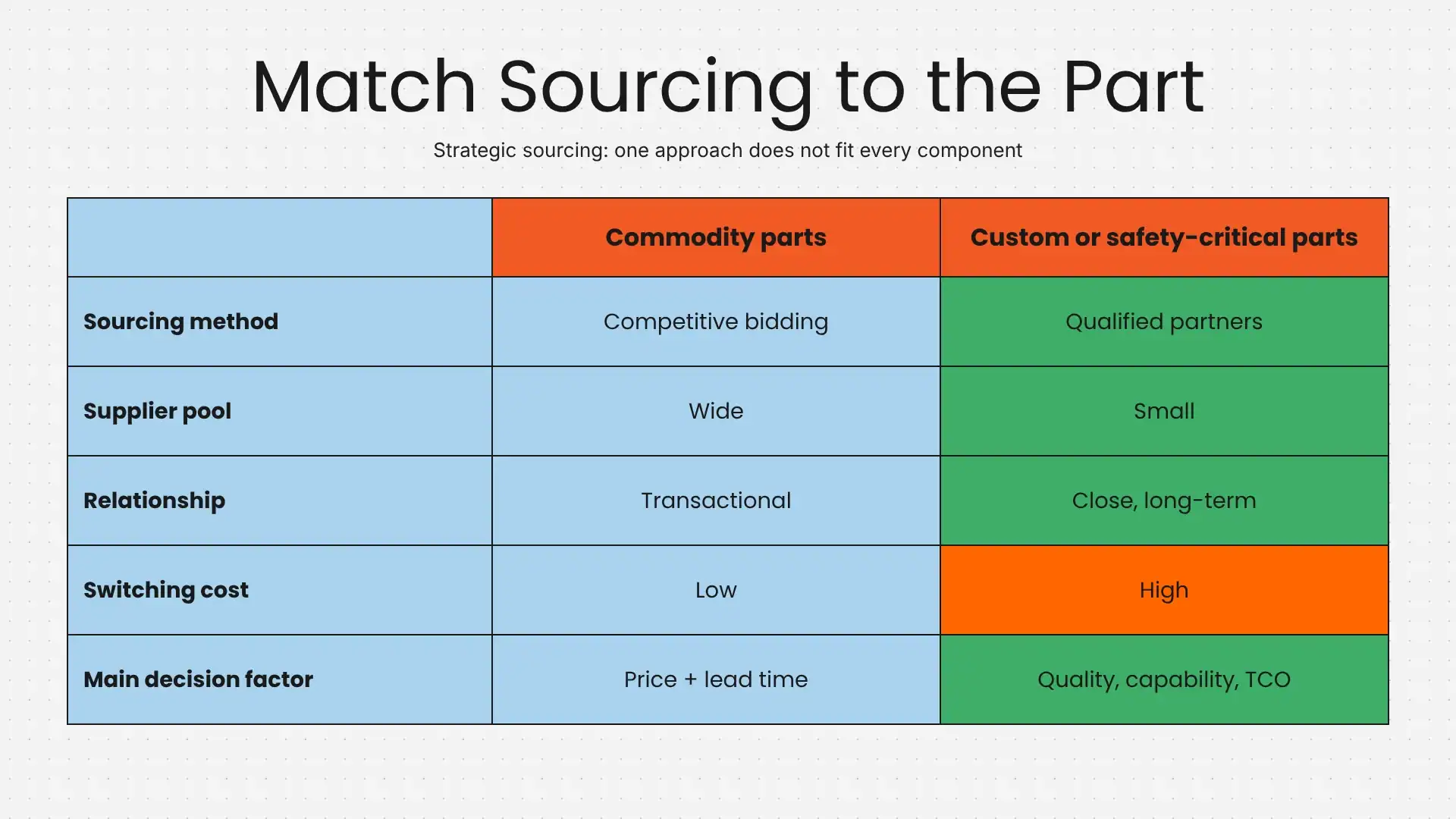
Strategic sourcing means matching the sourcing method to the part, not applying one approach to everything. High-volume, low-risk commodities might go to competitive bidding. Complex, custom, or safety-critical components are common in automotive and medtech manufacturing.
They often justify a smaller pool of qualified partners and a closer relationship.
This is because switching costs and requalification time are high if something goes wrong.
Incorporating Cost Analysis
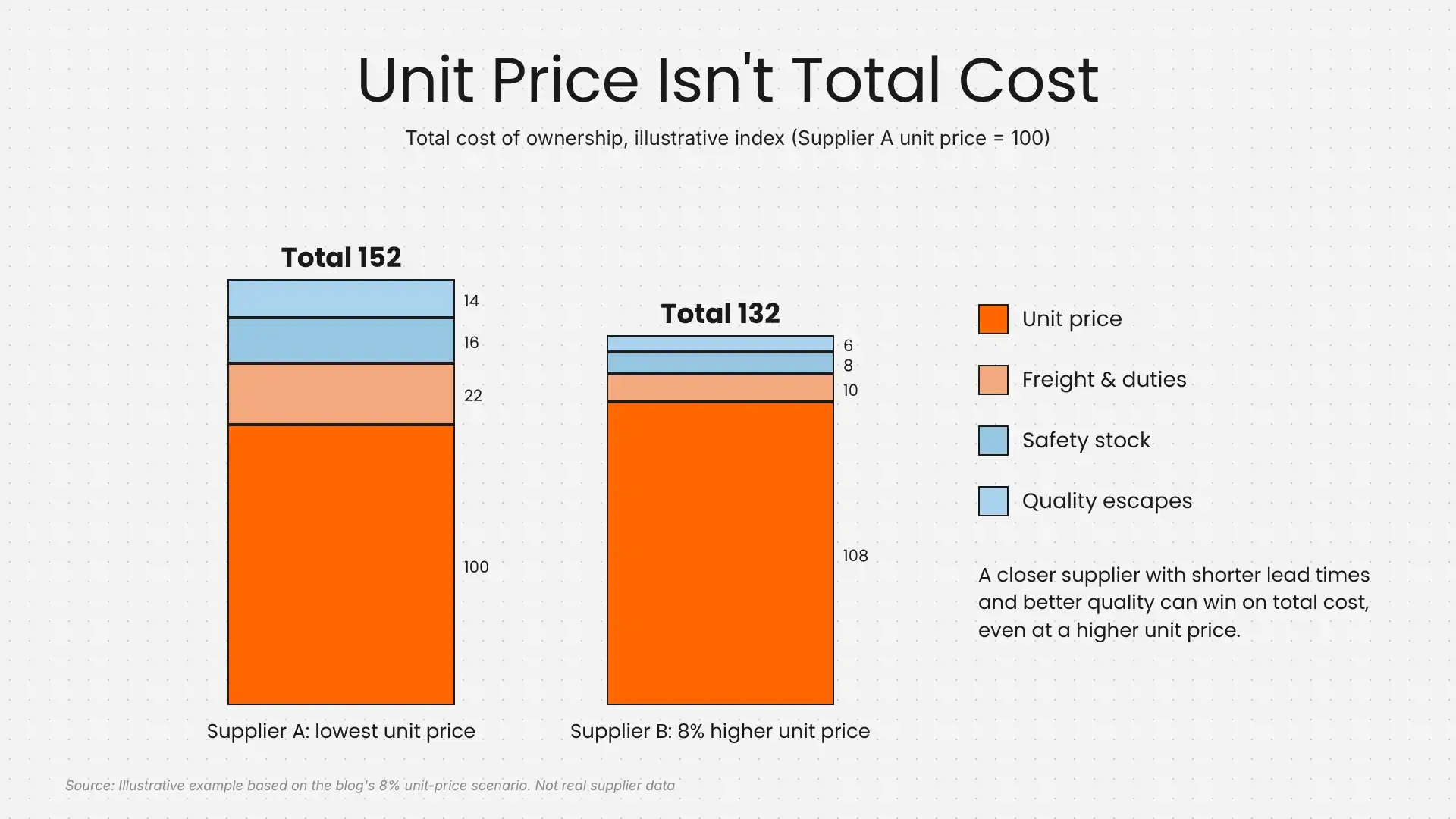
Cost analysis at the strategy stage means total cost of ownership, not quoted unit price. Factor in tooling, freight, duties, quality escapes, and the cost of holding safety stock against a long lead time. A supplier may charge 8% more per unit.
But the supplier is closer.
The lead time is shorter.
The quality is better.
Because of this, the supplier is often cheaper overall.
This is true once you count landed cost and risk honestly.
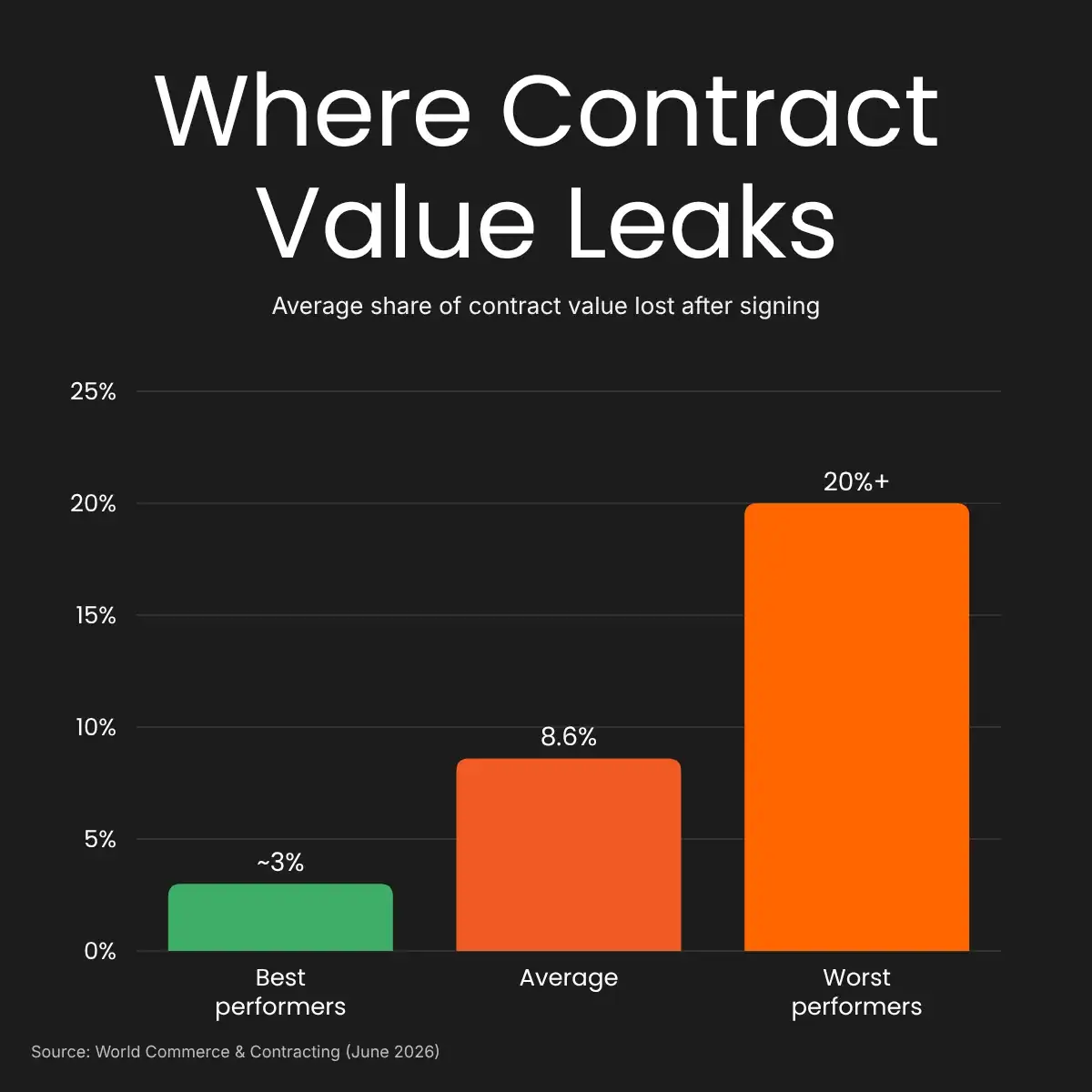
Stronger contracting can recover 2 to 3% of total spend in the first year, and 5 to 10% over three years. World Commerce & Contracting and Ironclad
Step 4: Request for Proposals (RFP)
The RFP is where your strategy becomes a document a supplier can actually respond to. A weak RFP produces vague, incomparable quotes. A strong one produces answers you can put side by side.
Crafting the Ideal RFP
The strongest RFPs are specific about three things: technical requirements (specs, tolerances, certifications), commercial terms (volumes, payment terms, contract length), and evaluation criteria, stated up front. Tell suppliers exactly how you will score their response. List price, lead time, quality history, and capacity. You will get proposals made for easy comparison. You will not get proposals that just sound impressive.
Tips for Effective Vendor Management
Vendor management starts at the RFP, not after the contract is signed. Set the tone here: how you’ll communicate, how often, and what happens when something slips. Suppliers respond to how a buyer runs a process. A clear, professional RFP signals a partner worth prioritizing when their capacity is tight and yours isn’t the only order on their line.
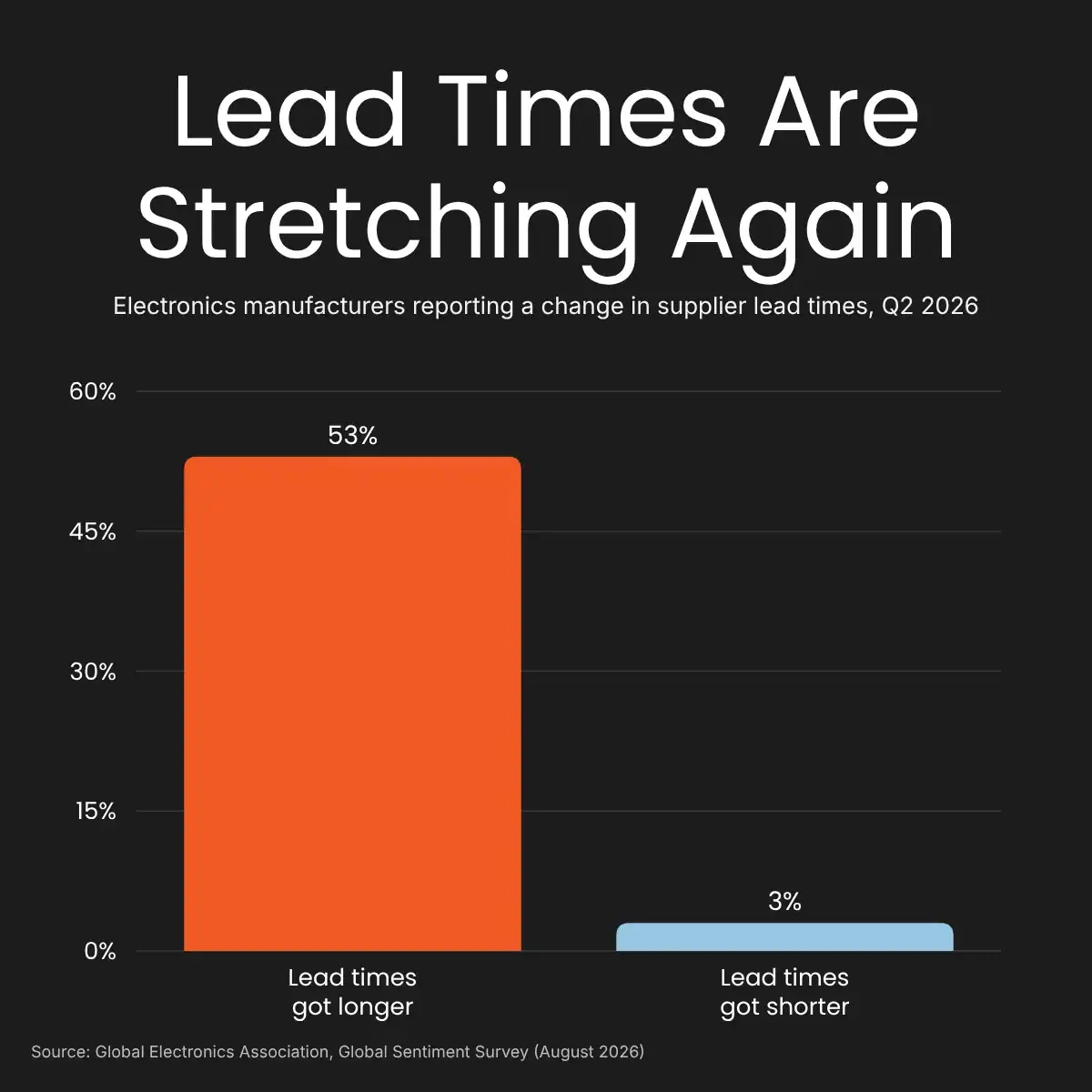
“The primary constraint today remains capacity and lead time and not demand.” Dr Shawn DuBravac, Chief Economist, Global Electronics Association
Step 5: Evaluate Proposals
With proposals in hand, the job is to compare them to your stated criteria. Do not rely on gut feelings about who was easiest to talk to.
Criteria for Selection
Score every proposal against the same weighted criteria you published in the RFP: technical fit, price, lead time, quality certifications, and financial health. Bring in engineering and quality stakeholders here, not just procurement. A supplier that looks best on a spreadsheet may still be the wrong choice if their process fails a design-for-manufacturing review.
Importance of Cost Analysis
Run the same total-cost-of-ownership lens from Step 3 across every finalist, using their actual quoted numbers instead of estimates. This is usually where the “cheapest” bid on paper drops in the ranking once freight, tooling amortization, and payment terms are factored in properly.
74% of business leaders view resilience as a driver of growth. World Economic Forum, Global Value Chains Outlook 2026
Step 6: Negotiate Contracts
Negotiation isn’t an adversarial exercise to squeeze the lowest price out of a supplier. It’s where both sides agree on the terms that will actually govern the relationship for the life of the contract.
Key Negotiation Strategies
Negotiate the full package, not just unit price: payment terms, minimum order quantities, lead time commitments, quality escape clauses, and price-change mechanisms tied to raw material indices. Know your walk-away point before you sit down. Be clear about your volume forecast. Suppliers price risk into contracts when future demand is unclear.
Building Strong Vendor Relationships
The best negotiated contracts leave room for the relationship to get better over time. Build in a regular business review cadence, shared visibility into forecasts, and a clear escalation path for quality or delivery issues. Suppliers who feel like true partners, not just a line item, often prioritize your orders when capacity gets tight.
“39 percent are pursuing dual sourcing strategies for components or raw materials.”
Step 7: Implement and Monitor
Signing the contract isn’t the finish line. It’s the start of the part of procurement that actually determines whether the deal delivers what it promised.
Tracking Procurement Performance
Track supplier performance against the metrics that matter: on-time delivery, quality defect rate, responsiveness, and cost variance against forecast. A scorecard reviewed each quarter turns “we think this supplier is fine” into “we know this supplier hit 97% on-time delivery.” It also shows there were zero quality escapes this quarter. It gives you facts if renegotiation or resourcing becomes necessary.
Ensuring Continuous Improvement
- Procurement doesn’t end when the order ships. Feed performance data into supplier reviews.
- Review your strategy each year as markets change.
- Treat every disruption as input for the next cycle through these seven steps.
- This includes late shipments, quality issues, and price shocks.
- Do not treat them as one-time problems to fix and forget.
According to the Georgia Department of Administrative Services, procurement follows clear stages. This discipline treats procurement as a repeatable, monitored cycle. It is not a one-time purchase. It separates organizations that control supply costs from those that constantly react to them.
“The U.S. win rate goes from 8% based on FOB or Ex-Works price to 32% based on TCO.” Harry Moser, Reshoring Initiative, testimony to the US House Small Business Committee
Frequently Asked Questions
What are the 7 steps of the procurement process?
The seven steps are identifying needs, conducting market research, developing a procurement strategy, requesting proposals (RFPs), evaluating proposals, negotiating contracts, and implementing with ongoing monitoring. Some organizations combine or rename steps, but the sequence – define, research, plan, request, evaluate, agree, monitor – stays consistent.
What’s the difference between procurement and purchasing?
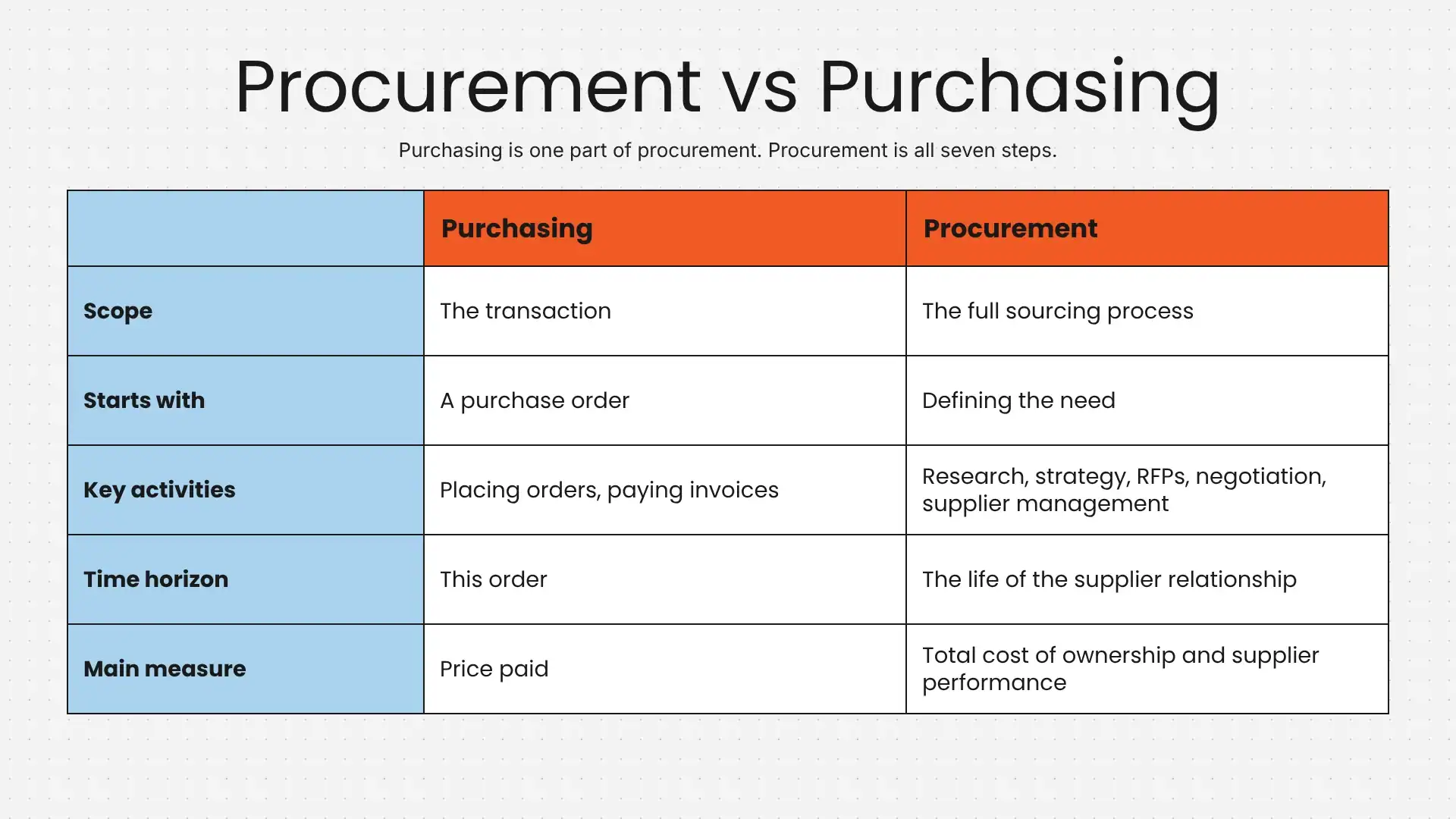
Purchasing is the transaction: placing the order and paying the invoice. Procurement covers the full process. It includes defining the need, researching the market, and managing suppliers long after issuing a purchase order. Purchasing is one part of Step 4; procurement is all seven steps.
How long does a full procurement cycle take?
It depends heavily on complexity. Sourcing a commodity part might take a few weeks. Qualifying a new supplier for a safety-critical automotive or medtech part can take several months.
This includes audits, sample builds, and certification checks. Building that timeline realistically into Step 1 avoids downstream schedule pressure.
What makes an RFP effective?
An effective RFP states technical requirements, commercial terms, and evaluation criteria clearly enough that suppliers can respond with comparable, specific proposals rather than generic pitches. Vague RFPs produce vague quotes that are hard to evaluate against each other.
How can manufacturers reduce procurement risk?
The most reliable levers are dual sourcing for critical components, total-cost-of-ownership analysis instead of price-only comparisons, and ongoing supplier performance monitoring rather than a one-time qualification check. Risk in procurement tends to show up at the step teams skipped, not the step they did carefully.
When procurement works well, it stays unseen. Production lines run, costs stay predictable, and no one upstream thinks about it. The enclosure supplier delivers on time again. Getting there consistently, across seven steps and dozens of suppliers, is exactly the kind of process work Intretech’s sourcing and supply chain team handles for automotive, medtech, consumer electronics, and energy manufacturers.
Book a consultation with Intretech’s sourcing team to see where your current procurement process has room to tighten.
Explore more related content

Best Practices for Contract Lifecycle Optimization
Best Practices for Contract Lifecycle OptimizationMost contracts don't fail at signature. They fail six months later,...

5 Proven Strategies for Effective Procurement Management in Today’s Market
5 Proven Strategies for Effective Procurement Management in Today's MarketProcurement used to be judged on one number:...

The NPI Process: How to Take Electronics From Prototype to Production
The NPI Process: How to Take Electronics From Prototype to ProductionBuilding one working prototype is hard. Building...