

What Are the Latest Techniques in Manufacturing for Product Designers?

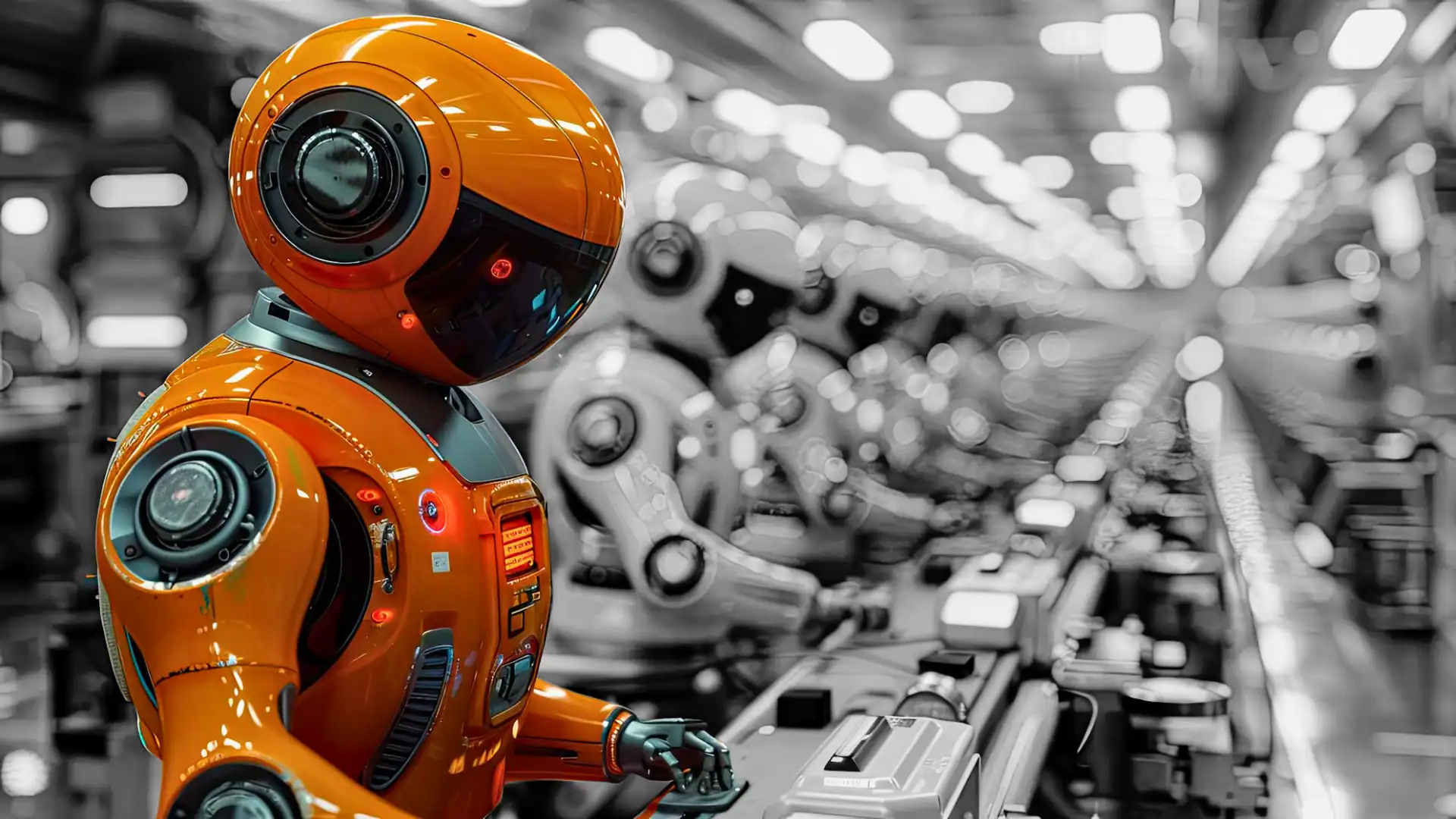
“70% of manufacturing costs are locked in during the design phase not during tooling or production.” — Industry consensus, OPD Design / Fictiv 2026
Most product designers learn about manufacturing the hard way – after the fact. After the tooling costs spiral. After the prototype fails. After the launch slips three months.
That’s not a design problem. It’s an information problem. Manufacturing is changing faster than most design teams realise, and if you’re not keeping up, you’re building products optimised for a world that no longer exists.
Here’s what’s actually happening on the factory floors right now – and why it matters for how you design.
The Evolution of Modern Production Techniques
The old manufacturing playbook was simple: design the product, hand it to production, watch them figure it out.
That model is no more.
Modern production techniques demand that designers understand the process before they touch the brief. The best products being built today aren’t just designed well – they’re designed with manufacturing in mind from day one. Flexibility, digitisation, and sustainability aren’t features of the final product. They’re constraints that shape the design process itself.
The companies winning right now are the ones that closed the gap between design and production. The ones still treating them as separate functions are paying for it in waste, rework, and missed timelines.
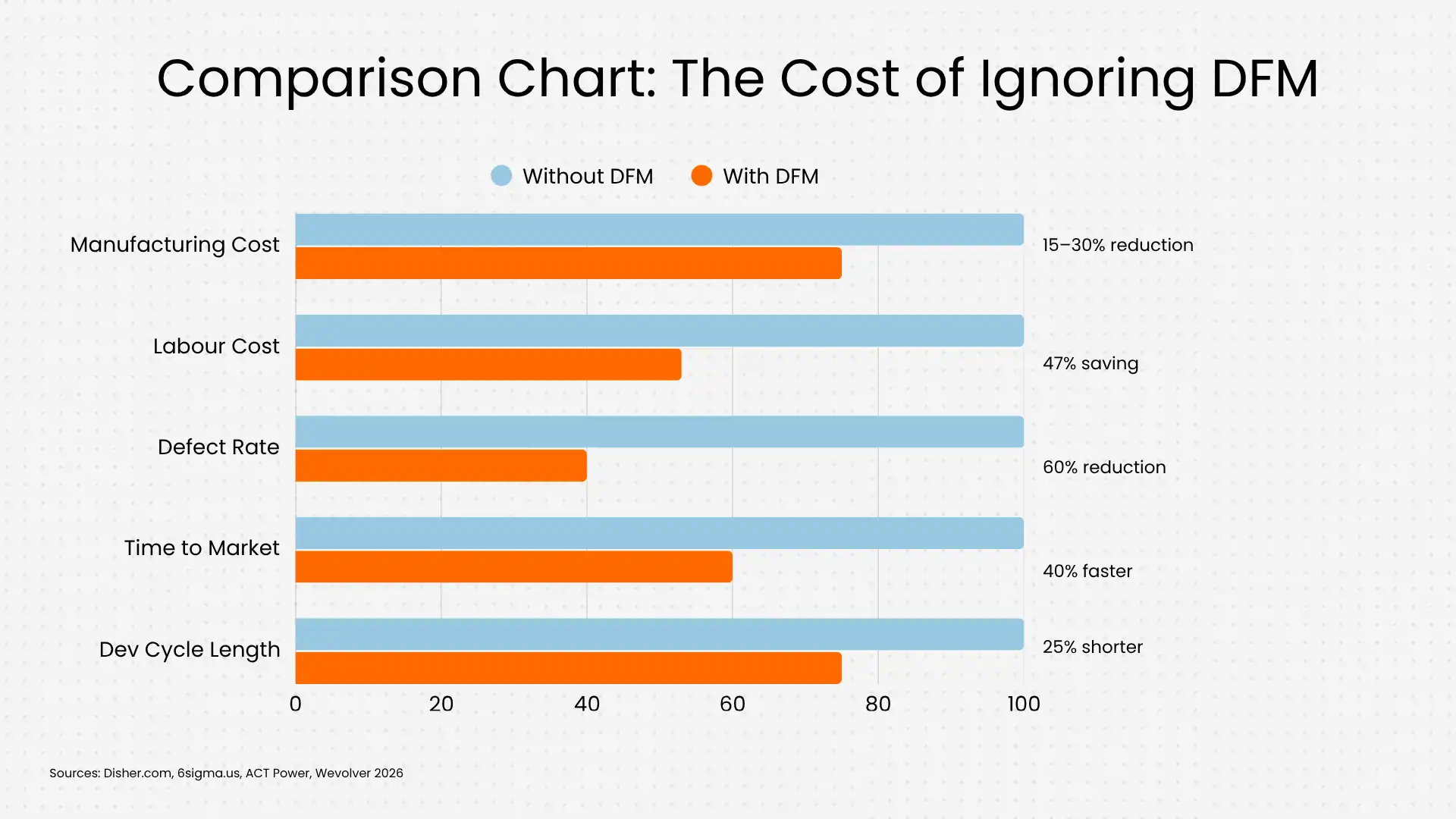
“A two-hour DFM conversation at concept stage can save weeks and thousands in rework later.” — Manufacturing engineering consensus, Fictiv / Geater Machining 2026
Smart Manufacturing Solutions: Digitalization and IoT
Here’s a claim most manufacturers won’t say out loud: a huge percentage of production inefficiencies aren’t caused by bad machines. They’re caused by bad information.
Smart manufacturing fixes that. IoT sensors embedded across the production environment feed real-time data back to every decision-maker in the chain. Not weekly reports. Not end-of-shift summaries. Live data – on throughput, temperature, pressure, deviation.
The results are measurable:
- Real-time process monitoring catches defects before they compound
- Predictive maintenance means machines get serviced when they need it, not on a calendar schedule that ignores actual wear
- Supply chain transparency replaces gut-feel forecasting with data-driven procurement
For product designers, this matters more than it might seem. When you design for a smart manufacturing environment, your tolerances, materials, and assembly sequences are no longer static specs – they’re live parameters that can be monitored, adjusted, and optimised in production. That’s a different kind of design brief.
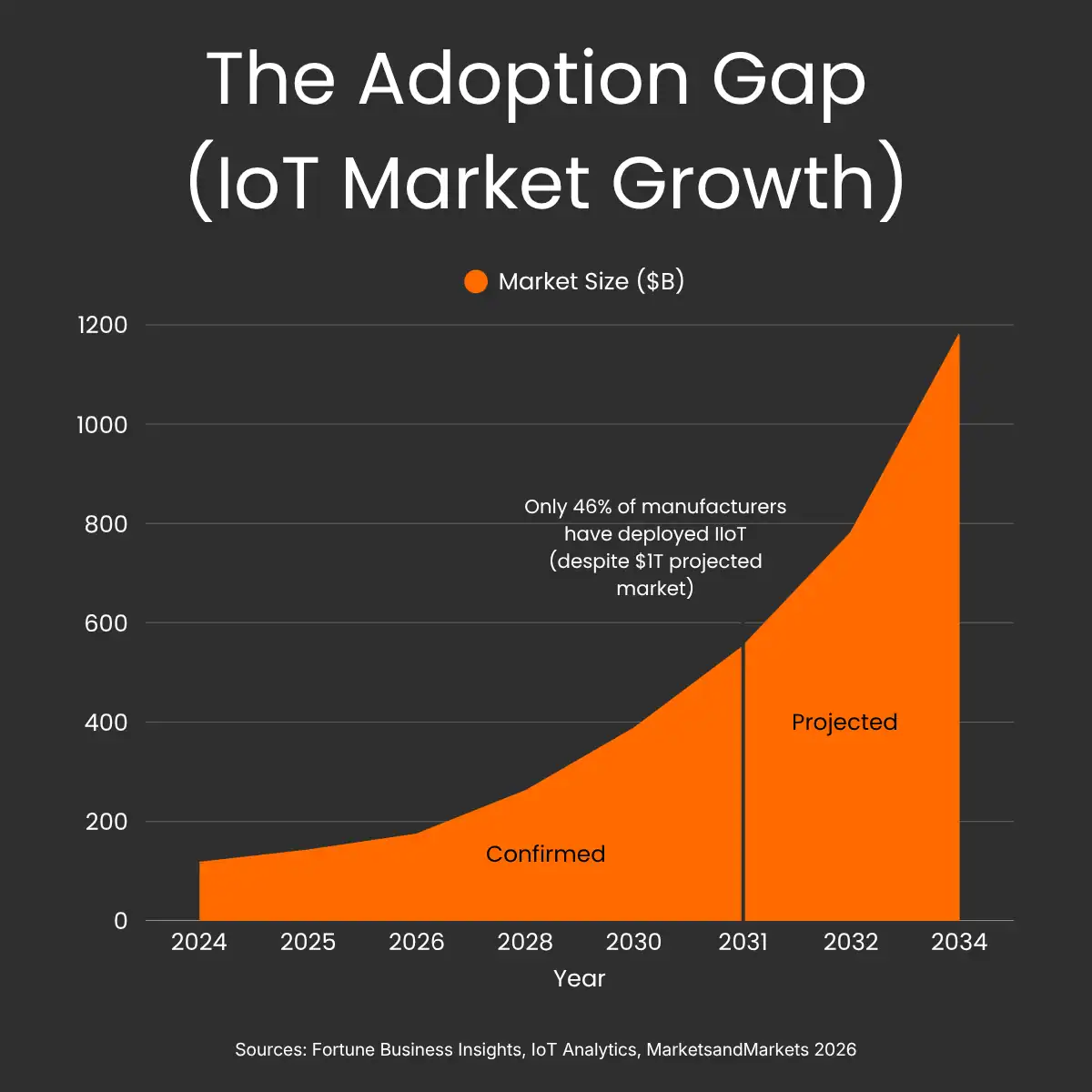
72% of manufacturers are boosting their digitisation efforts by leveraging IoT for industrial operation transformation, yet over half haven’t deployed IIoT at facility level yet. — IoT Analytics / MarketsandMarkets 2026
Automation in Manufacturing: Robotics, AI, and Cobots
Automation isn’t coming for manufacturing jobs. It already arrived. The conversation has already moved on.
What’s actually interesting now is collaborative automation where cobots are designed to work alongside humans, not replace them. Traditional robotics excelled at repetitive, high-volume tasks in controlled environments. Cobots handle the messier reality of modern production lines, where product variety is high and batch sizes are getting smaller.
AI is the layer on top of all of it. Machine learning lets robotic systems adapt – recognising new components, adjusting grip pressure, flagging anomalies all without needing to be reprogrammed every time something changes.
The practical upshot for designers:
- Design for automation from the start. If your product requires awkward manual assembly steps, you’re adding cost and variability that could have been designed out.
- Cobots enable smaller batch production. This is good news for designers who want to iterate faster and launch leaner.
- AI-driven quality control can catch surface defects and dimensional errors that human inspection misses at speed.
This isn’t theoretical. It’s happening in EMS facilities now. Designers who understand it build better products.
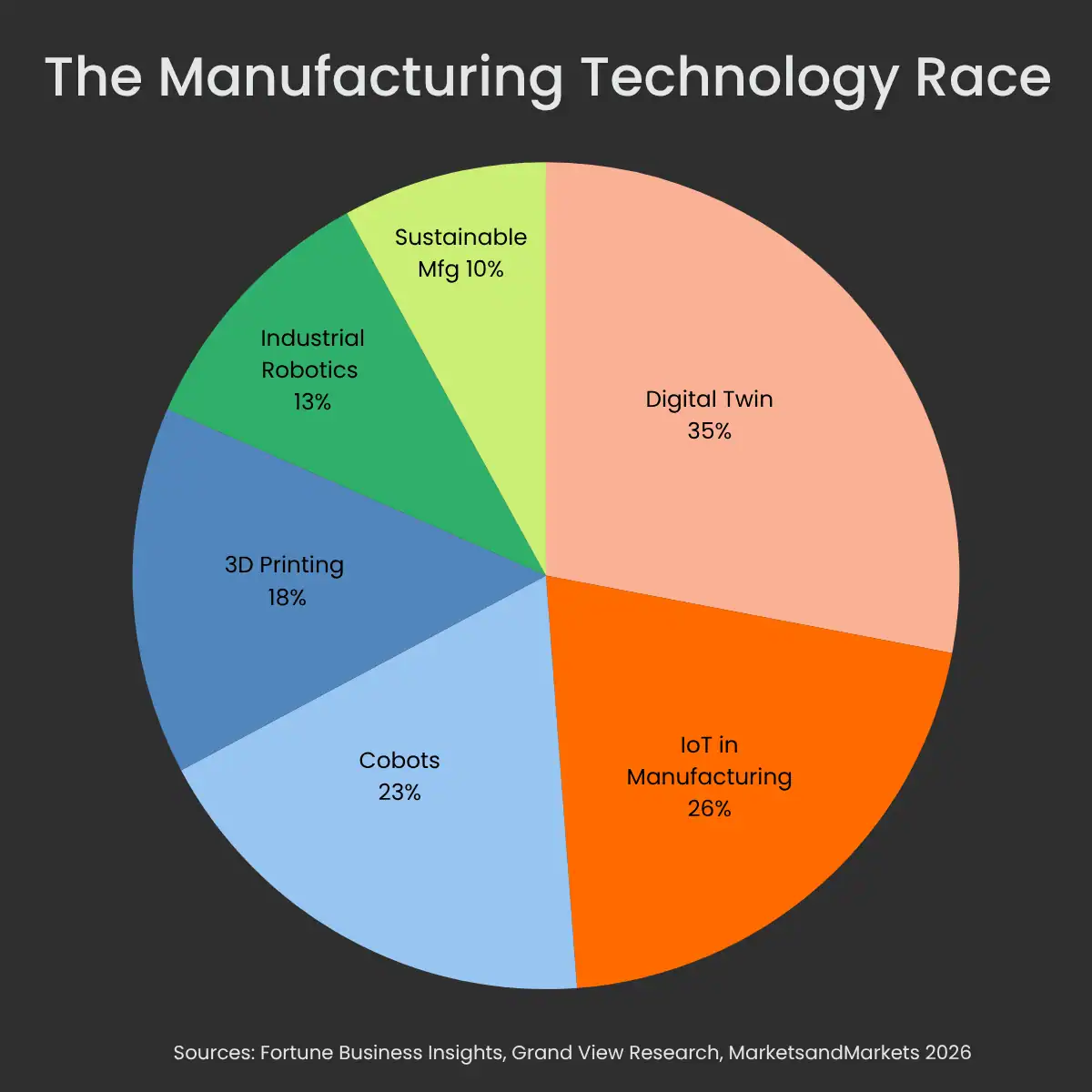
The combined 2026 market value of the 6 key sectors exceeds $470 billion
Innovative Manufacturing Processes: 3D Printing and Additive Manufacturing
Additive manufacturing still gets talked about like it’s a novelty. It isn’t.
3D printing has earned its place as a serious production tool – not just for rapid prototyping, but for end-use parts in aerospace, medical devices, and consumer electronics. The geometry constraints that defined industrial design for decades don’t apply anymore. Complex internal channels, lattice structures, organic forms all buildable, all repeatable.
What this means in practice:
- Rapid prototyping compresses development cycles. You can test a physical iteration in days, not weeks.
- Reduced material waste compared to subtractive methods. You build up rather than cut away.
- Mass customisation becomes economically viable. Personalised products without personalised tooling costs.
The caveat: 3D printing isn’t a free pass. Material properties, surface finish requirements, and production volumes still determine whether it’s the right call. Designers who treat additive manufacturing as the default answer rather than one option in a broader toolkit might just end up with products that are expensive to scale.
Knowing when to use it. That’s the skill.
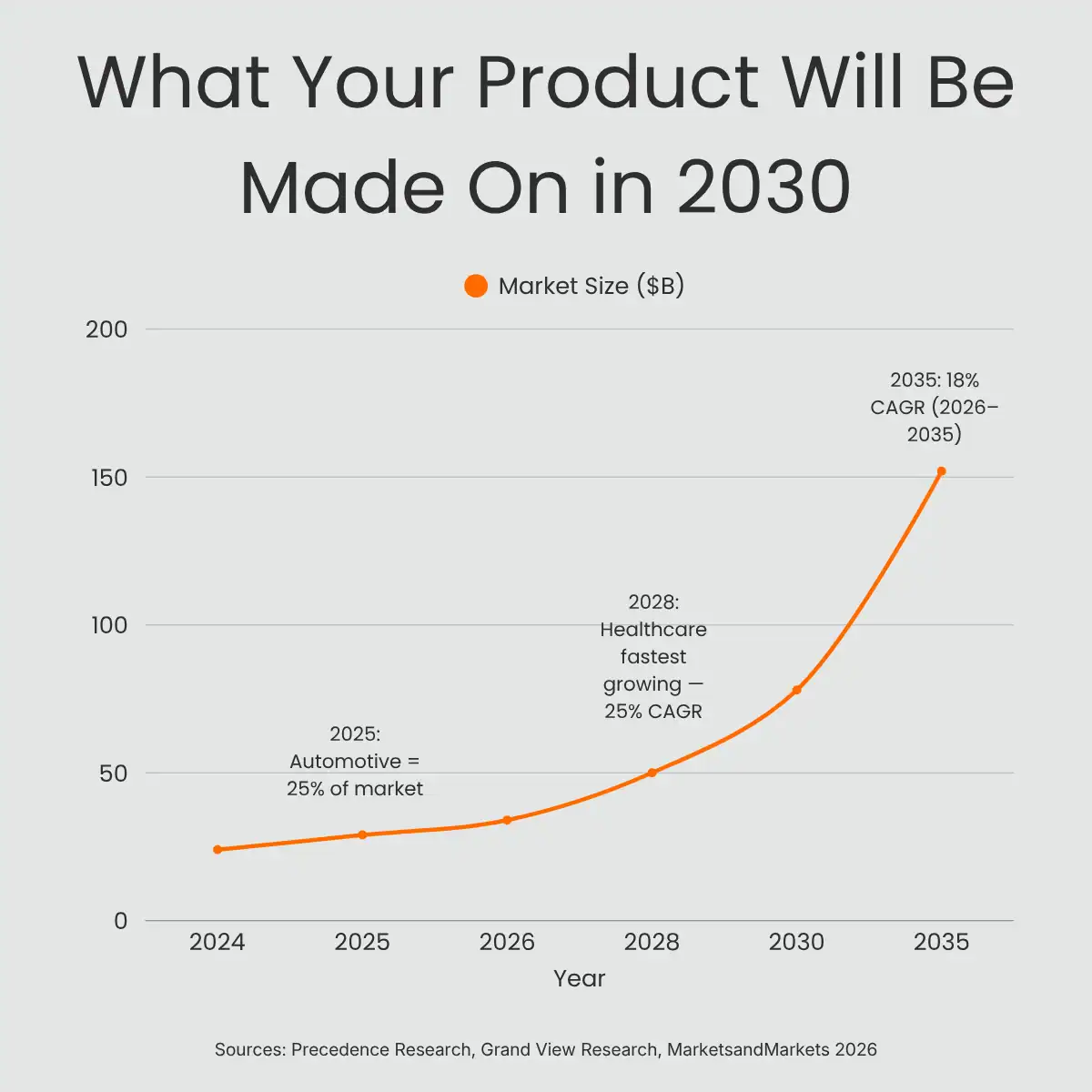
2026 marks a shift from technology-driven growth to ecosystem-driven value creation. Intelligence, collaboration, and sustainable business models are now the differentiators.” — 3DPrint.com Expert Forecasts, 2026
Sustainable Manufacturing Practices: Eco-Friendly and Circular Approaches
Sustainable manufacturing isn’t the future. It’s the bare minimum.
Regulations are tightening. Customers are paying attention. And procurement teams at major OEMs are now asking suppliers for environmental credentials as standard. If you’re designing products without considering their end-of-life, you’re designing products that are increasingly hard to sell.
The circular economy model isn’t actually abstract. It’s a practical design constraint: how do you make this product so the materials can be recovered, reused, or safely disposed of? The answer changes your material choices, your joining methods, and your disassembly sequences.
The manufacturers leading on sustainability are also finding it pays off operationally:
- Renewable energy adoption cuts long-term energy costs
- Lean principles that minimise waste also reduce production cost
- Recyclable and biodegradable materials are expanding in capability, not shrinking
Eco-friendly and efficient are no longer in tension. Increasingly, they’re the same thing.
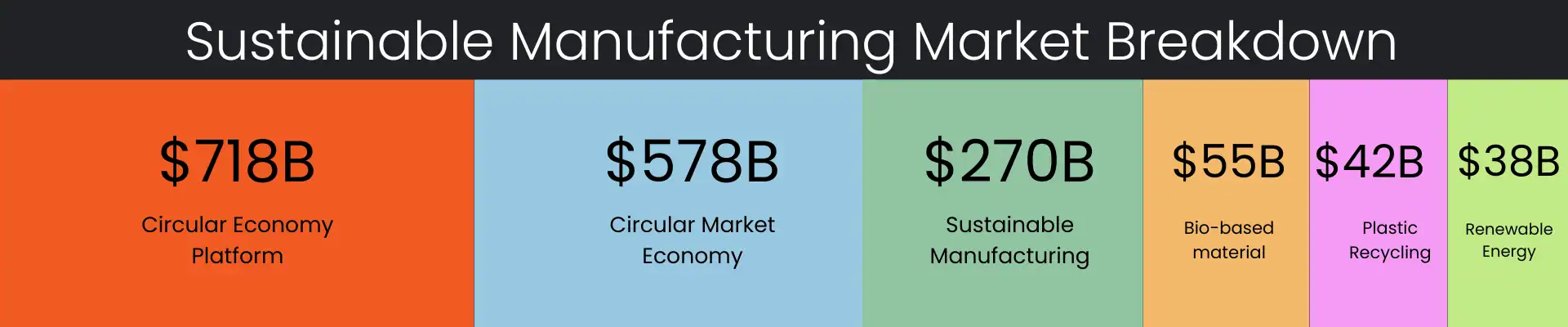
Sustainable manufacturing market segments collectively worth $1.7 trillion by 2030
Advanced Manufacturing Methods: Materials, Simulation, and Digital Twins
The best manufacturers aren’t just building products faster. They’re building the right product the first time.
Advanced materials are a big part of that. Composites, nanomaterials, and bio-based polymers are giving designers performance characteristics that weren’t available even a few years ago – lighter, stronger, more thermally stable, more sustainable. But materials alone don’t cut it, unfortunately.
Simulation software is what turns material choices into confident decisions. Virtual testing of products under real-world stress conditions means you catch failure modes before tooling is cut, not after. That’s the difference between a three-week design iteration and a three-month crisis.
Digital twins take it further. A digital twin isn’t just a 3D model – it’s a live virtual replica of a physical system, updated in real time. For product designers, it means you can watch how your design performs in production, monitor wear patterns, and predict where problems will emerge before they do.
This is advanced manufacturing in practice: fewer surprises, faster decisions, better products.
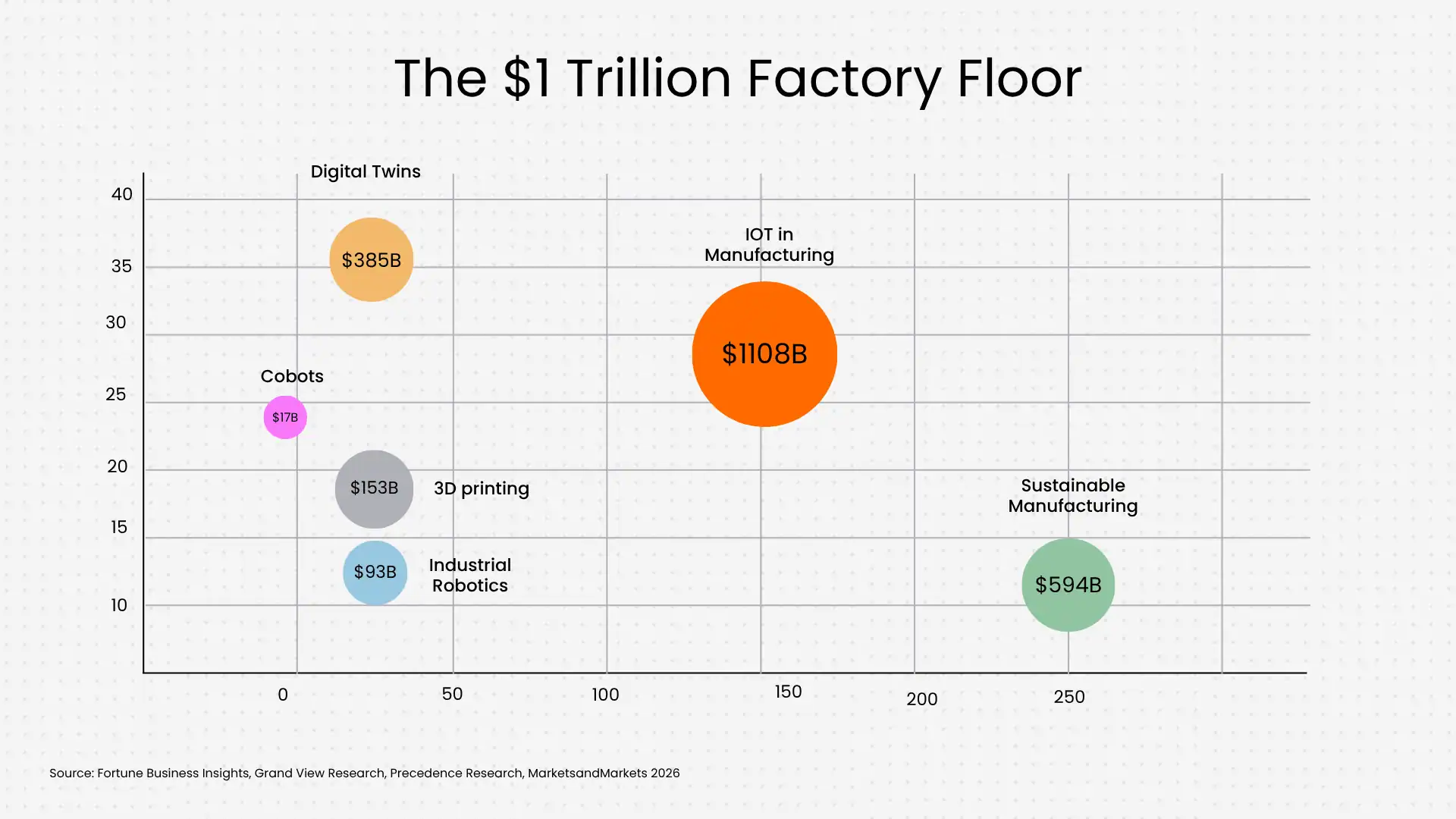
75% of organisations report difficulty scaling beyond pilot projects; the gap your clients can close with the right partner
Manufacturing Technology Trends Shaping the Future
Three trends worth paying attention to right now:
Digital transformation is moving from strategy documents to factory floors. The manufacturers investing in connected systems, cloud-based MES, and data analytics platforms are pulling away from those still running on spreadsheets and tribal knowledge.
IoT-driven smart factories are becoming the baseline expectation for tier-one supply chains. If you’re designing a product destined for a sophisticated OEM, your manufacturing partner needs to meet that standard.
Personalisation at scale is forcing production systems to become more adaptable. Consumer expectations have shifted. Fixed, high-volume production runs are giving way to flexible lines that can switch configurations quickly. Designers who build adaptability into their products – through modular architecture, standardised interfaces, and considered assembly sequences – are making life easier for everyone downstream.
These aren’t distant forecasts. They’re the conditions under which your next product will be manufactured.
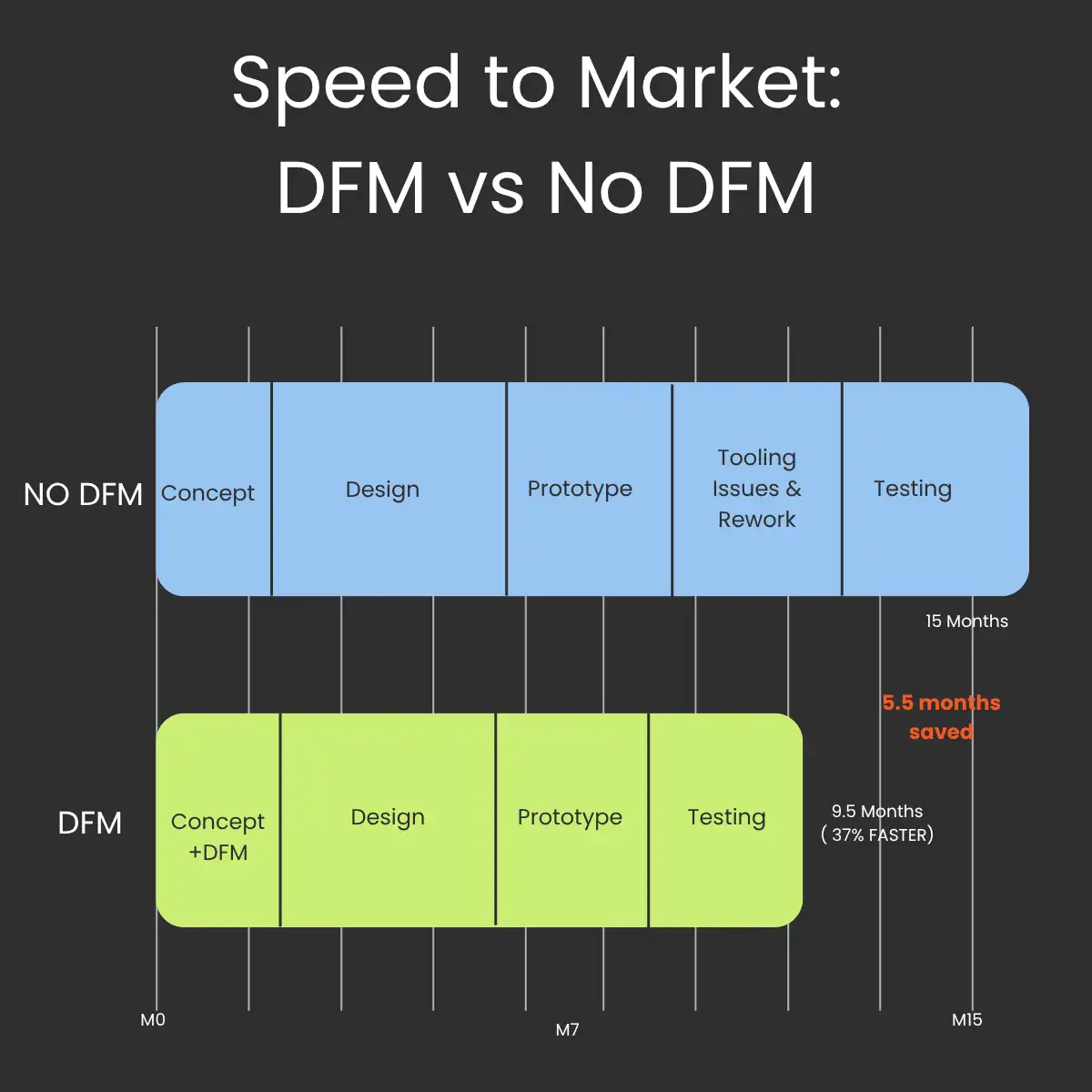
The cost of late-stage design changes is schedule, morale, and market opportunity. Every week of delay has a downstream multiplier.
Key Considerations for Product Designers
If you take one thing from this, make it this: manufacturing knowledge is not the manufacturer’s job alone.
The most effective product designers today understand the process. They make material choices with production in mind. They design assemblies that don’t fight automation. They account for end-of-life from the first sketch.
Three things to build into your process:
- Design for sustainability — not as a compliance checkbox, but as a genuine constraint that improves the product.
- Design for flexibility — modular, adaptable products are easier to manufacture, easier to iterate, and easier to sell into a market that keeps changing.
- Design for the manufacturing technology that exists now — not the one from your last project, or the one described in a textbook from 2015.
The gap between great design and great product is almost always a manufacturing problem. Close that gap early.
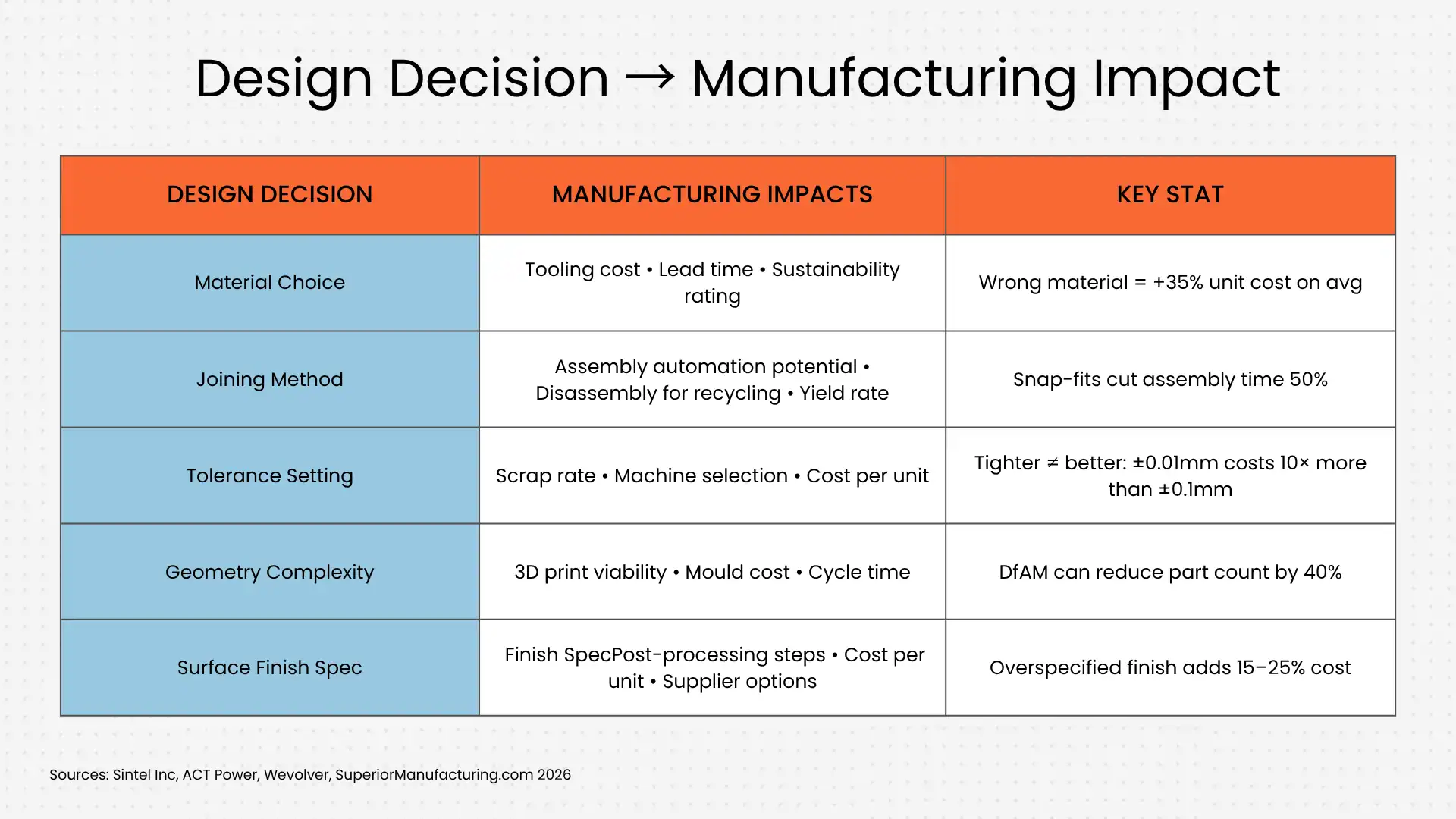
Overspecified surface finish adds 15–25% to unit cost with zero functional benefit
Embracing the Future of Manufacturing
Manufacturing is not a downstream problem. It’s a design input.
The techniques reshaping production right now – smart manufacturing, automation, additive processes, sustainable practices, digital twins aren’t just changing how products are built. They’re changing what’s possible to design. Product designers who engage with that shift will build better products, faster, at lower cost, with fewer late-stage surprises.
The ones who don’t will keep wondering why their products are always over budget and behind schedule.
The future of manufacturing is already here. The only question is whether your design process has caught up.
Explore more related content
USMCA Rules of Origin: A Practical Guide for Electronics OEMs (2026 Update)
USMCA Rules of Origin: A Practical Guide for Electronics OEMs (2026 Update) USMCA rules of origin used to be a...
Nearshoring vs Offshoring: How to Choose Your Manufacturing Footprint and EMS Partner
Nearshoring vs Offshoring: How to Choose Your Manufacturing Footprint and EMS PartnerNearshoring vs offshoring is...
Electronics Manufacturing in Mexico: A Buyer’s Guide to Nearshoring in 2026
Electronics Manufacturing in Mexico: A Buyer’s Guide to Nearshoring in 2026Electronics manufacturing in Mexico is no...