

The Top 3 Myths About JDM ODM OEM Explained


Ask three people in hardware what JDM, ODM and OEM mean and you’ll often get four answers.
That confusion isn’t harmless. Pick the wrong manufacturing model, and you may pay for design work you do not need.
You could also give away IP you meant to keep.
Or you may lock yourself into a supply chain you cannot control. Pick the right one and you get to market faster, with a product that’s easier to build, scale and support.
Lets clear up the three most common myths about JDM, ODM and OEM, explains how each model really works, and shows why the choice reaches far beyond the factory floor.
65% of manufacturers say attracting and retaining talent is their primary business challenge (US). The Manufacturing Institute and Deloitte
Overview of JDM, ODM, and OEM
Here’s the short version.
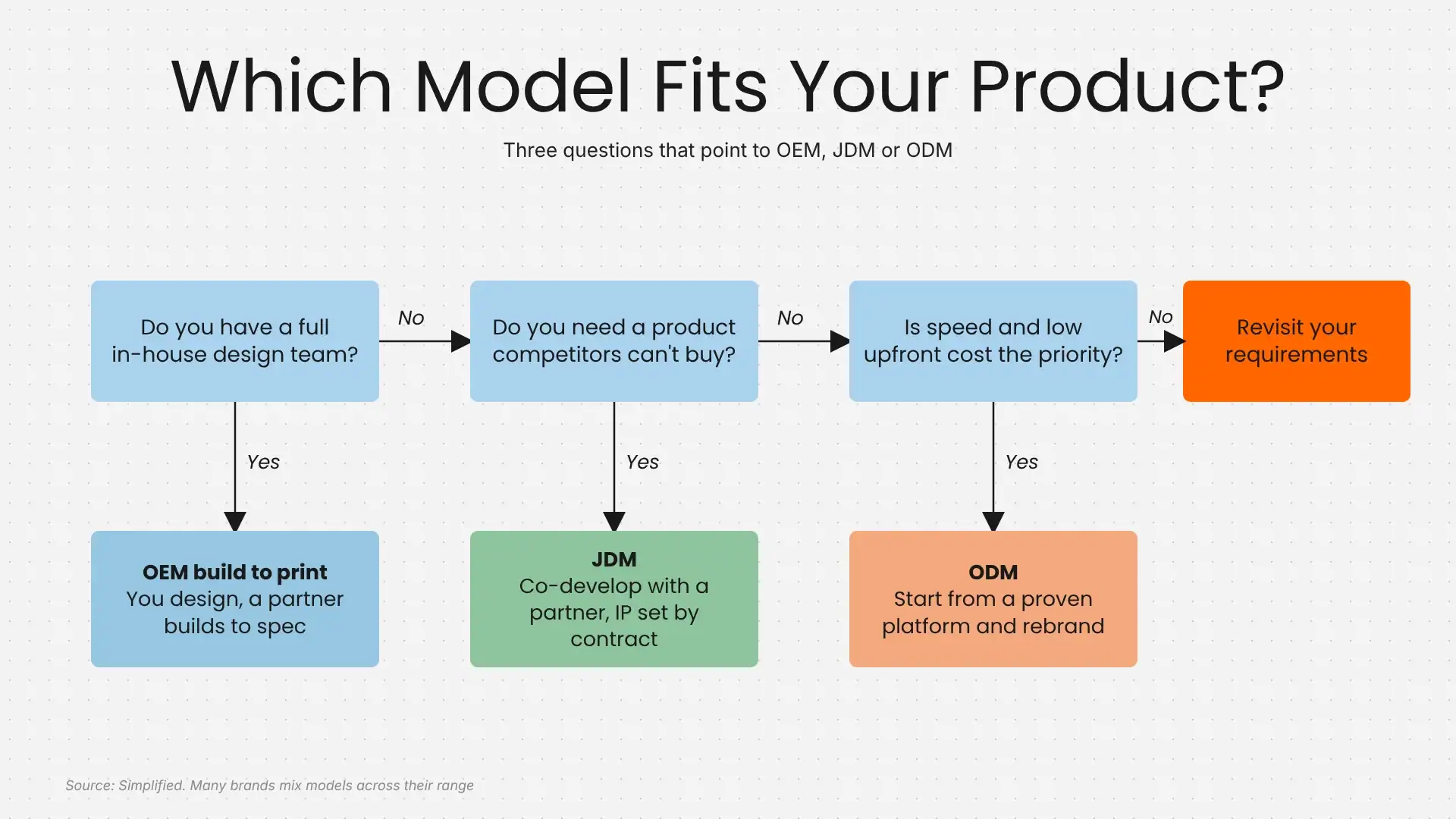
OEM (Original Equipment Manufacturer). In US usage, the OEM is the brand owner. It owns the product, the design, the IP and the customer relationship. It may build the product itself or hire a contract manufacturer to build it exactly to its specifications.
ODM (Original Design Manufacturer). The ODM designs and manufactures a product, then sells it to brands that put their own name on it. The ODM usually owns the core design. The brand chooses from an existing platform, adds its own branding and makes limited changes.
JDM (Joint Design Manufacturer, also called Joint Development Manufacturing). The brand and the manufacturer design the product together. The brand brings the product vision, market knowledge and key requirements. The manufacturer brings engineering, design for manufacturing (DFM) and production expertise. IP ownership is agreed in the contract, often split by who developed what.
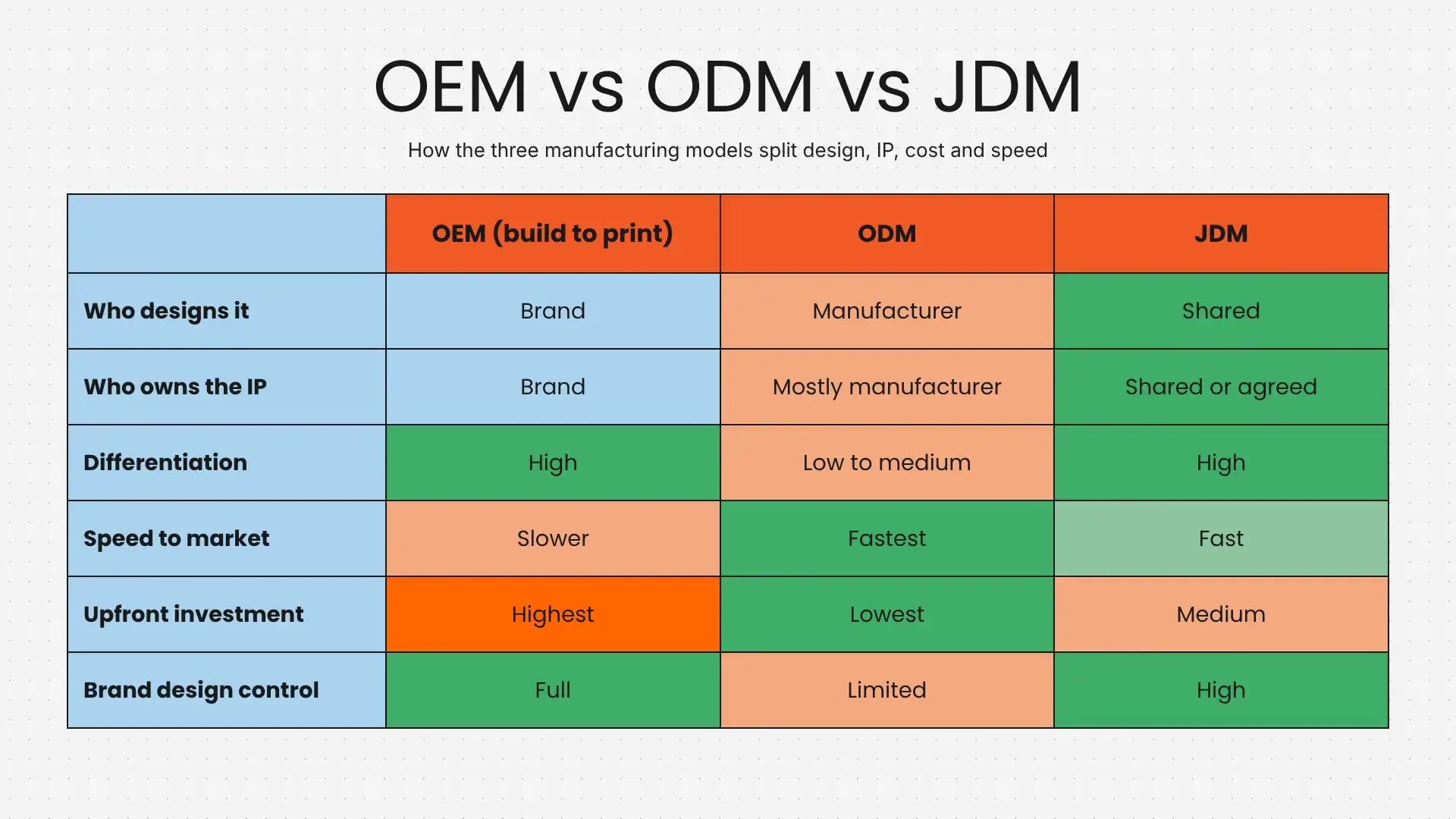
|
OEM (build to print) |
ODM |
JDM |
|
|---|---|---|---|
|
Who designs it |
Brand |
Manufacturer |
Brand and manufacturer together |
|
Who owns the IP |
Brand |
Mostly manufacturer |
Shared or as agreed in contract |
|
Product differentiation |
High |
Low to medium |
High |
|
Speed to market |
Slower |
Fastest |
Fast |
|
Upfront investment |
Highest |
Lowest |
Medium |
|
Brand’s control over design |
Full |
Limited |
High |
86% of survey respondents want to share design data more easily with manufacturing.
Importance in Modern Manufacturing
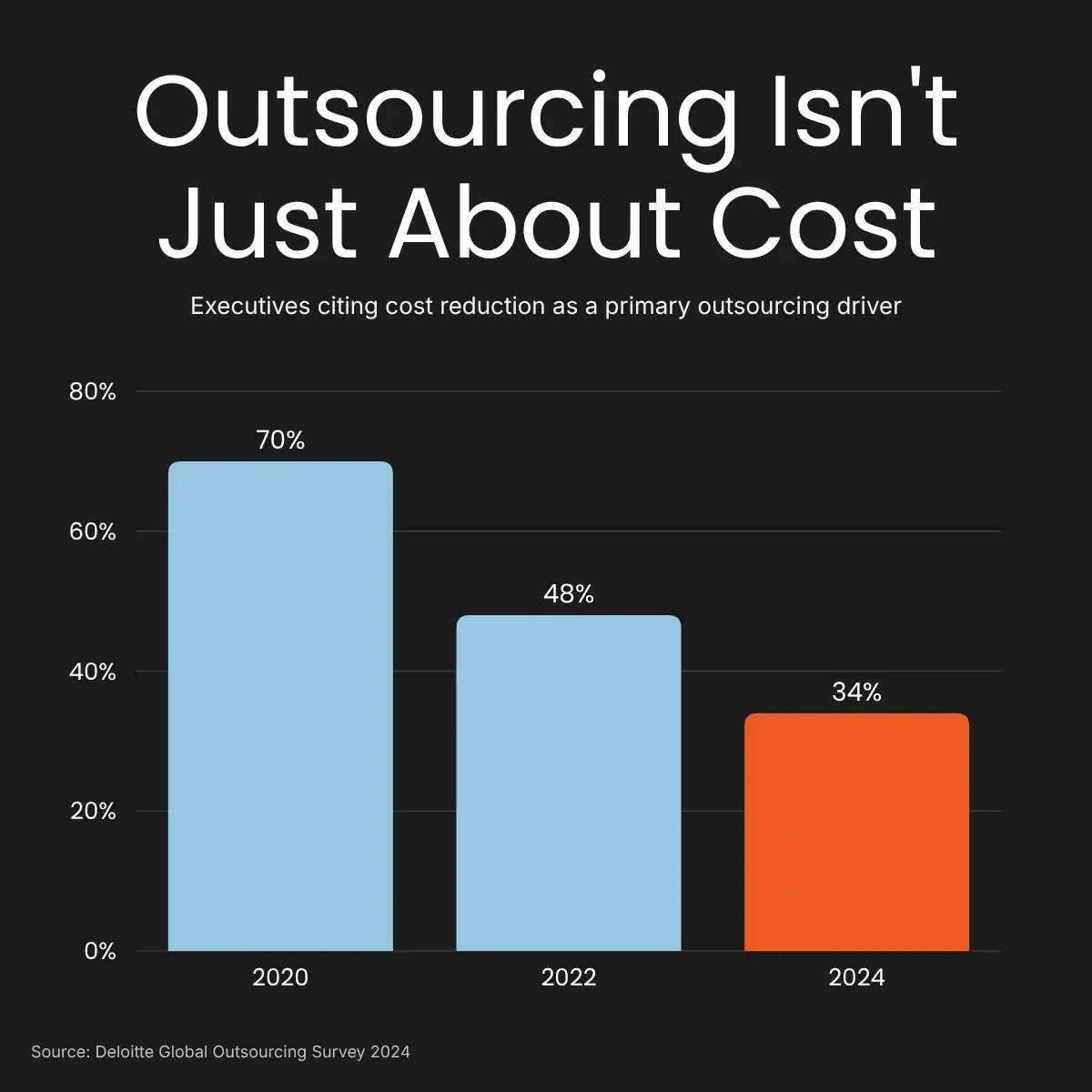
Products have become harder to build. A connected kitchen appliance or wearable now combines electronics, firmware, mechanical parts, wireless connectivity and regulatory approvals. Few brands have every one of those skills in-house, and few want to.
At the same time, sourcing strategies are being rewritten. Many US companies are spreading production across regions and moving some of it closer to their end markets. The manufacturing model you choose decides how much flexibility you keep when that happens.
That’s why it’s worth getting the basics right. Starting with the myths.
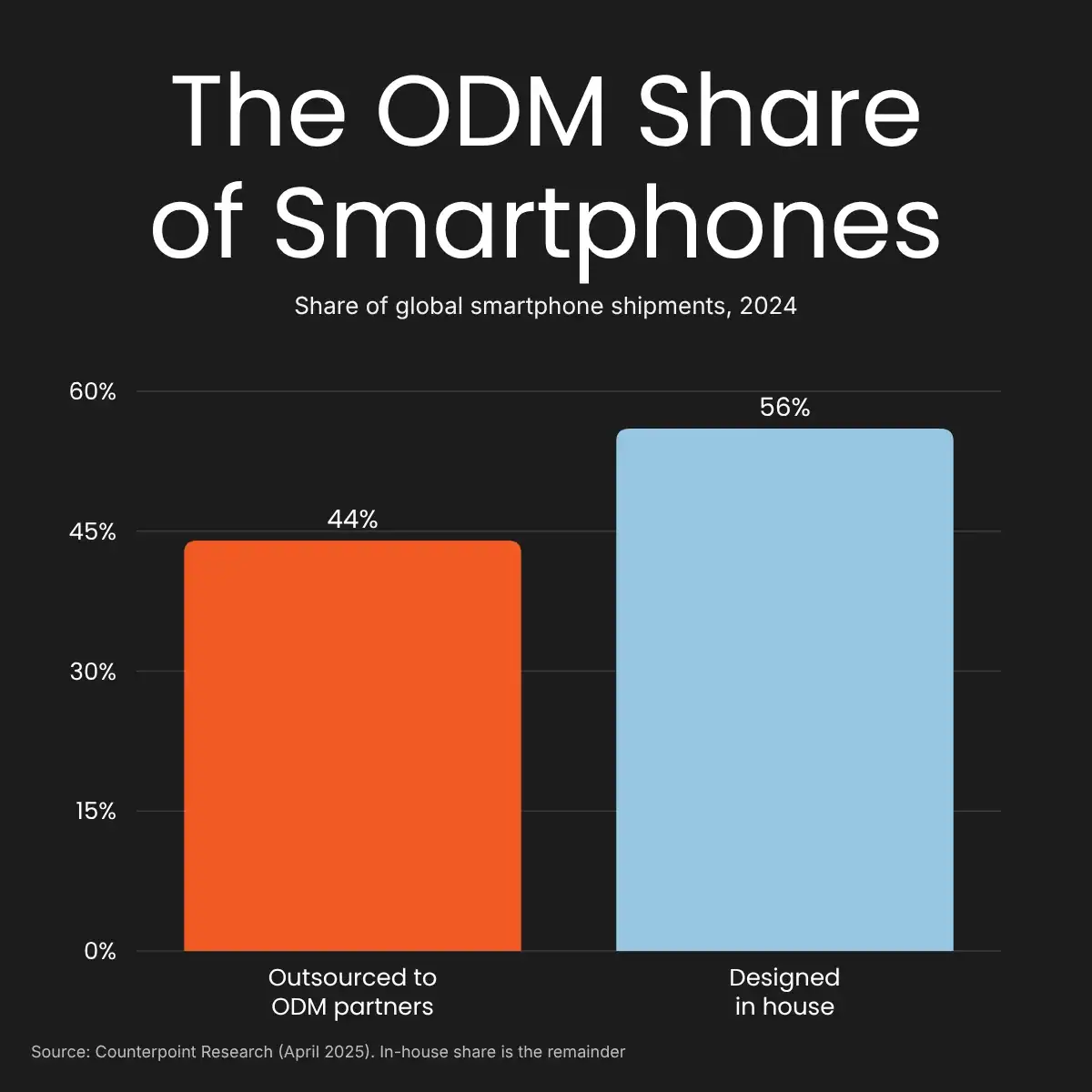
“ODM/IDH smartphone shipments grew 6% YoY in the first half of 2024.” Counterpoint Research (Oct 2024)
Myth 1: JDM, ODM, and OEM Are the Same
They’re not. They overlap, they’re often used loosely, and a single manufacturer may offer all three. But they describe very different splits of responsibility, risk and ownership.
Differences Explained
The easiest way to tell them apart is to ask three questions.
- Who owns the design? With an OEM build-to-print model, the brand does. With an ODM, the manufacturer usually does. With a JDM, it’s shared, and the contract spells out exactly how.
- Who carries the engineering risk? In a build-to-print model, if the design has a flaw, that’s mostly on the brand. In an ODM model, the manufacturer has already proven the platform. In a JDM model, risk is shared, which is why DFM reviews early in development matter so much.
- How different can your product be from a competitor’s? This is the big one for product differentiation. ODM platforms can be sold to several brands, so the product under the logo may look a lot like a rival’s. OEM and JDM models give you a product that’s yours.
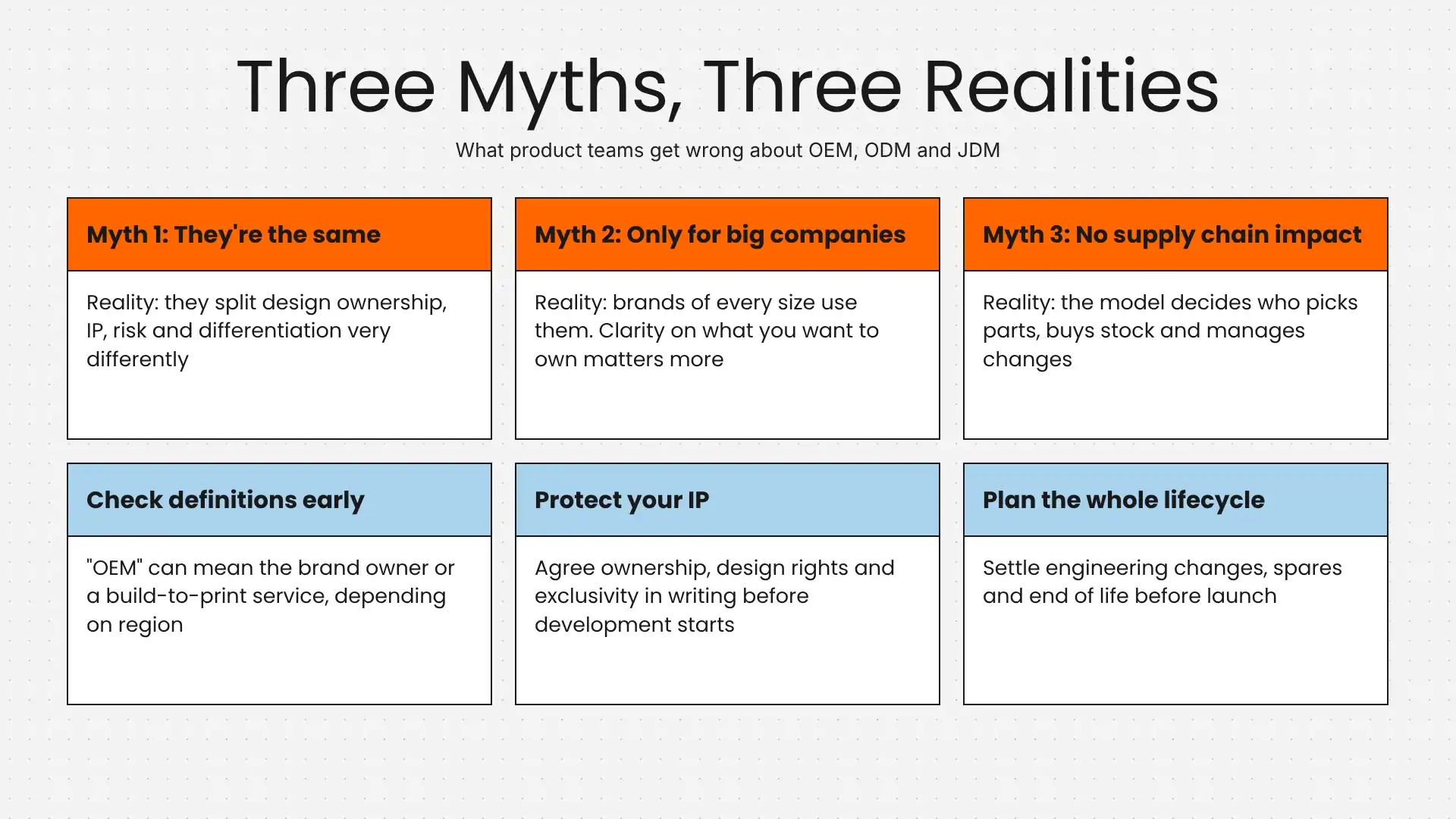
There’s one more source of confusion. The term “OEM” doesn’t mean the same thing everywhere. In the US, it usually means the brand owner. In many manufacturing hubs, suppliers use “OEM” to describe the service of building a product to a customer’s own design. Both uses are correct in context. When you’re talking to a potential partner, agree definitions on the first call so you’re not reading the same word two different ways.
North American EMS bookings rose 53.5% year on year in August 2026, with a book-to-bill ratio of 1.39. Global Electronics Association
Real-World Examples
OEM with contract manufacturing. A medical device company designs a handheld diagnostic device in-house, owns the full design package and hires a manufacturing partner for PCB assembly, box build and testing. The brand controls everything. The manufacturer delivers to spec.
ODM. A consumer brand wants to launch a portable speaker range in six months. It picks an existing, certified speaker platform from an ODM, changes the color, enclosure finish and packaging, and adds its logo. Fast and affordable, but similar products may be on shelves under other names.
JDM. An energy technology company has a clear idea for a smart home battery controller and strong firmware skills, but no hardware team at scale. It co-develops the product with a manufacturing partner. The partner handles electronics design, mechanical design, DFM and certification support. The brand owns the product vision and the software. The result is a differentiated product that’s built to be manufactured from day one.

“The primary constraint today remains capacity and lead time and not demand.” Dr Shawn DuBravac, Global Electronics Association (Jul 2026)
Myth 2: Only Large Companies Use JDM, ODM, and OEM
This might be the most expensive myth of the three, because it stops smaller companies from even asking.
Common Misconceptions
“You need huge volumes to get a manufacturer’s attention.” Volume matters, but it isn’t everything. Many manufacturers actively look for growing brands with strong products, because today’s 5,000-unit order can be tomorrow’s 500,000. What partners look for is a credible plan, clear requirements and a team that’s easy to work with.
“Outsourcing design means losing control.” Only if the contract allows it. In a JDM model, IP ownership, design rights and exclusivity are negotiated up front. Smaller brands can protect what matters most, such as software, industrial design or a core technology, while drawing on the manufacturer’s engineering depth.
“Big brands have in-house engineering, so they don’t need ODMs or JDMs.” Many of the best-known consumer electronics brands work with ODM and JDM partners for at least part of their range. Using external design and manufacturing capacity is a strategic choice, not a sign of weakness.
“It’s only for consumer electronics.” JDM, ODM and OEM models are used across automotive, medical devices, industrial equipment, energy and smart home products.

“Organizations that treat network decisions as adaptable, rather than fixed, are better equipped to protect margins and respond to change.” Vicky Forman, Gartner (Jul 2026)
Case Studies of Small and Medium Enterprises
The patterns below are typical of how small and mid-sized companies use each model.
The startup that went ODM first. A young smart home brand needs to prove demand before raising more funding. It launches with a modified ODM product, learns from customer reviews and sales data, then moves to a JDM model for its second generation so it can build in features the market actually asked for. ODM buys speed. JDM buys differentiation once the market is proven.
The specialist that kept design in-house. A mid-sized industrial equipment company has deep engineering expertise and strict regulatory requirements. It keeps full design ownership and uses a manufacturing partner for assembly services, testing and supply chain management. Its advantage is the design. Its partner’s advantage is building it reliably at scale.
The scale-up that needed a co-developer. A growing medtech brand has a strong clinical concept but limited electronics design resources. A JDM partnership gives it access to a full engineering team. It also provides design for manufacturing expertise and production capacity under one roof. This avoids building a hardware department from scratch.
The lesson: company size matters less than knowing what you want to own, and what you’d rather a partner did better.
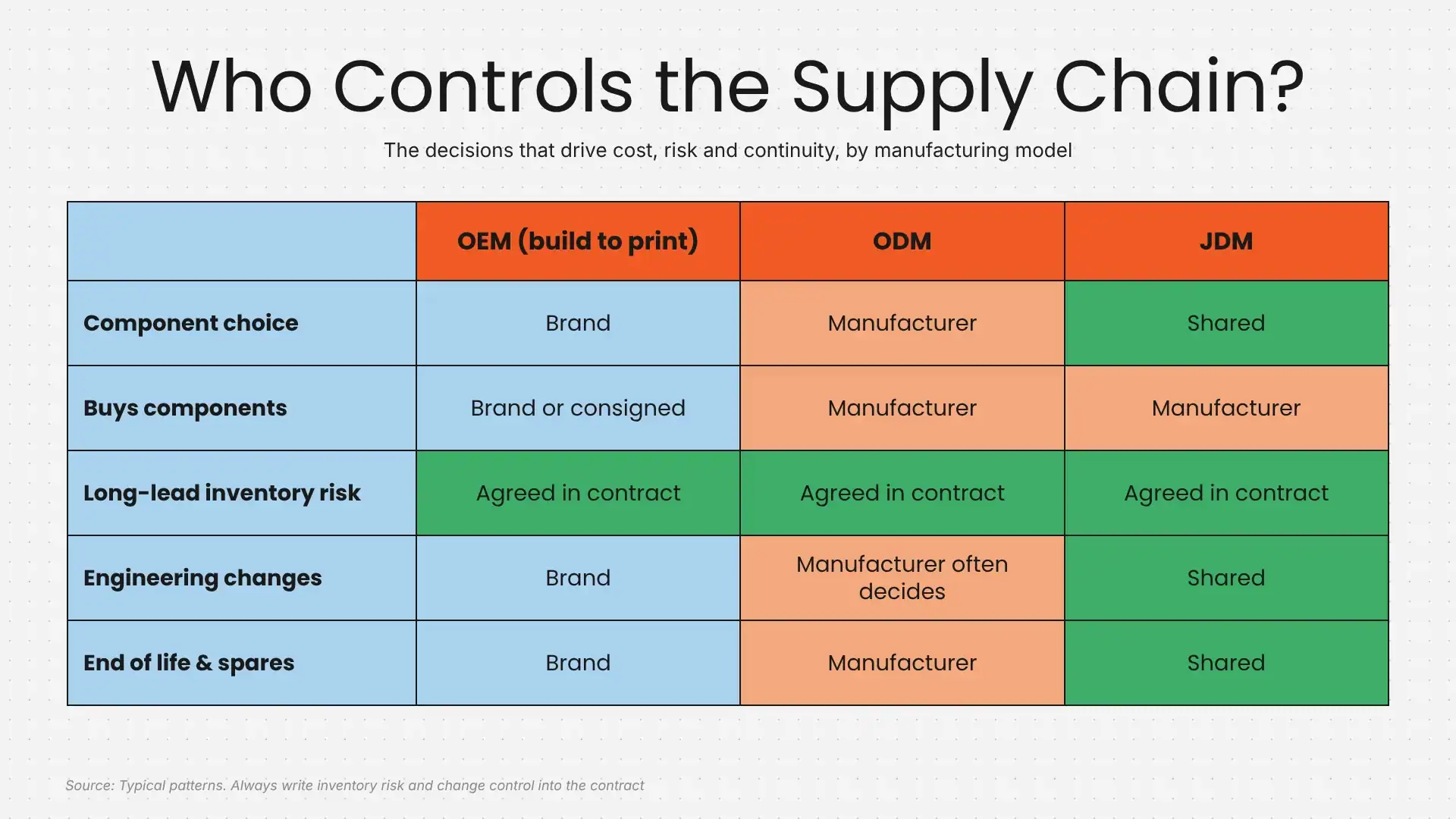
“Supply chain footprints are evolving, with 73 percent of survey respondents reporting progress on dual-sourcing strategies.”
Myth 3: They Don’t Impact Supply Chain Management
Many teams treat the manufacturing model as an engineering or commercial decision and leave the supply chain until later. That’s a mistake. The model you choose shapes your supply chain management from the first sourcing decision to end of life.
Role in Product Lifecycle Management
Product lifecycle management covers a product from concept through design, production, service and retirement. Your manufacturing model changes who controls each stage.
Design. In a JDM or ODM model, the manufacturer influences component choices early. A good partner will steer you toward parts that are available, multi-sourced and suited to volume production. That’s design for manufacturing and design for supply chain working together.
Engineering changes. When a component goes end-of-life or a design needs updating, who manages the change? In an OEM build-to-print model, the brand usually drives it. In a JDM, it’s shared. In an ODM, the manufacturer may decide, sometimes with little input from the brand.
End of life and support. Spare parts, repairs, last-time buys and product retirement all depend on who owns the design files and supplier relationships. Settle this before launch, not when the first warranty claim lands.
Reverse engineering risk. Clear IP terms and controlled access to design data protect you from your product being copied. This matters most in ODM relationships, where the same platform may already serve several brands.

SMEs make up 99.8% of all EU enterprises and 65.2% of employment.
Influence on Inventory Management Solutions
Your manufacturing model also shapes how inventory is planned, held and paid for.
Who buys the components? In most JDM and ODM models, the manufacturer sources and buys materials, which reduces the cash a brand ties up in stock. In a build-to-print model, the brand may consign key parts or set approved vendor lists.
Who holds the risk on long-lead parts? Semiconductors and specialist components can have long lead times. Agree who carries the cost of buffer stock and excess or obsolete inventory. This should be written into the contract.
How does forecasting work? Good inventory management solutions rely on shared forecasts, clear order windows and visibility of stock across the supply chain. The deeper the partnership, as in a JDM, the more closely these systems need to connect.
Where is production located? For US brands, a manufacturing partner with facilities closer to the US market can cut lead times and buffer stock, and make it easier to respond to demand changes. For many companies, that’s now a core part of their sourcing strategies, alongside production in other global regions.
“Seventy-three percent of companies have added or removed production locations from their supply chain networks in the past two years.” Gartner (Aug 2024).
Recap of Myths
Myth 1: JDM, ODM and OEM are the same. They’re not. They split design ownership, IP, risk and differentiation in very different ways. Agree the definitions with your partner on day one.
Myth 2: Only large companies use them. Companies of every size use these models. What matters is a clear view of what you want to own and what a partner can do better.
Myth 3: They don’t affect supply chain management. They shape it from component choice to end of life, including who carries inventory risk and how quickly you can respond to change.
Future Outlook on JDM, ODM, and OEM
The lines between these models will keep blurring. More manufacturers now offer a sliding scale, from pure build-to-print to full co-development, and brands increasingly mix models across their product range.
Three trends stand out:
- Earlier collaboration. Brands are bringing manufacturing partners in at the concept stage, because that’s when DFM and supply chain decisions have the biggest impact on cost.
- Regional footprints. Sourcing strategies are moving toward production closer to end markets, supported by a global network for resilience.
- Connected data. Shared product lifecycle management and supply chain data between brand and manufacturer is becoming the norm, not the exception.
The right model isn’t the one with the best acronym. It’s the one that matches what you need to own, how fast you need to move, and how much risk you want to share.
At Intretech, we work with brands across automotive, medtech, consumer electronics and energy on OEM, ODM and JDM programs, from early design through to volume production across our global manufacturing footprint, including our facility in Monterrey, Mexico, for customers serving the US market.

Counterfeit and pirated goods account for up to 4.7% of EU imports. OECD and EUIPO, Mapping Global Trade in Fakes
Frequently Asked Questions
What is the difference between JDM, ODM and OEM?
With OEM, the brand owns and controls the design and a manufacturer may build it to spec. With ODM, the manufacturer designs the product and brands sell it under their own name. With JDM, the brand and manufacturer design the product together and agree to IP ownership in the contract.
Which is better for a startup, ODM or JDM?
ODM is usually faster and cheaper for proving demand, because the platform already exists. JDM takes longer but gives you a differentiated product and more control over IP. Many startups launch with ODM and move to JDM for later generations.
Who owns the IP in a JDM agreement?
It depends on the contract. IP is often split so that each party keeps what it brought to the project, with shared or licensed rights to jointly developed work. Always agree IP terms in writing before development starts.
Does OEM mean the same thing everywhere?
Not always. In the US, OEM usually means the brand that owns the product. In many manufacturing regions, suppliers use OEM to describe building a product to the customer’s own design. Agree definitions early with any new partner.
How does the manufacturing model affect supply chain management?
It decides who chooses components, who buys and holds inventory, who manages engineering changes and who carries the risk on long-lead parts. Settle these points in the contract before production starts.
Not sure which model fits your next product?
Explore more related content

The 7 Steps of the Procurement Process: A Practical Guide for Manufacturing Teams
The 7 Steps of the Procurement Process: A Practical Guide for Manufacturing TeamsImportance of Procurement in Business...

Best Practices for Contract Lifecycle Optimization
Best Practices for Contract Lifecycle OptimizationMost contracts don't fail at signature. They fail six months later,...

5 Proven Strategies for Effective Procurement Management in Today’s Market
5 Proven Strategies for Effective Procurement Management in Today's MarketProcurement used to be judged on one number:...