

Active Sound Design in EVs: How Engineers Craft Electric Engine Sound
Written by Isha Rathor
August 28, 2025 (refreshed 2026)
That low growl you expect when you accelerate is not automatic in an EV—engineers and sound designers build it. Silence can feel unnatural on the road, and it can also miss pedestrian-alert rules. Active Sound Design (ASD) is the audio engineering that makes quiet electric vehicles sound intentional: safer outside, more expressive inside.
What is Active Sound Design?
ASD uses digitally produced or modified sound to enhance or replicate vehicle sound. Three common types:
- Engine Sound Enhancement (ESE): reshapes natural engine noise (mainly ICE).
- Synthetic Sound Generation: simulated engine sounds for hybrids and EVs.
- External Acoustic Vehicle Alerting Systems (AVAS): mandatory exterior alerts for pedestrians at low speed.
For engineers this means coordinating live CAN bus data, throttle position, and gear state—not just adding a subwoofer.
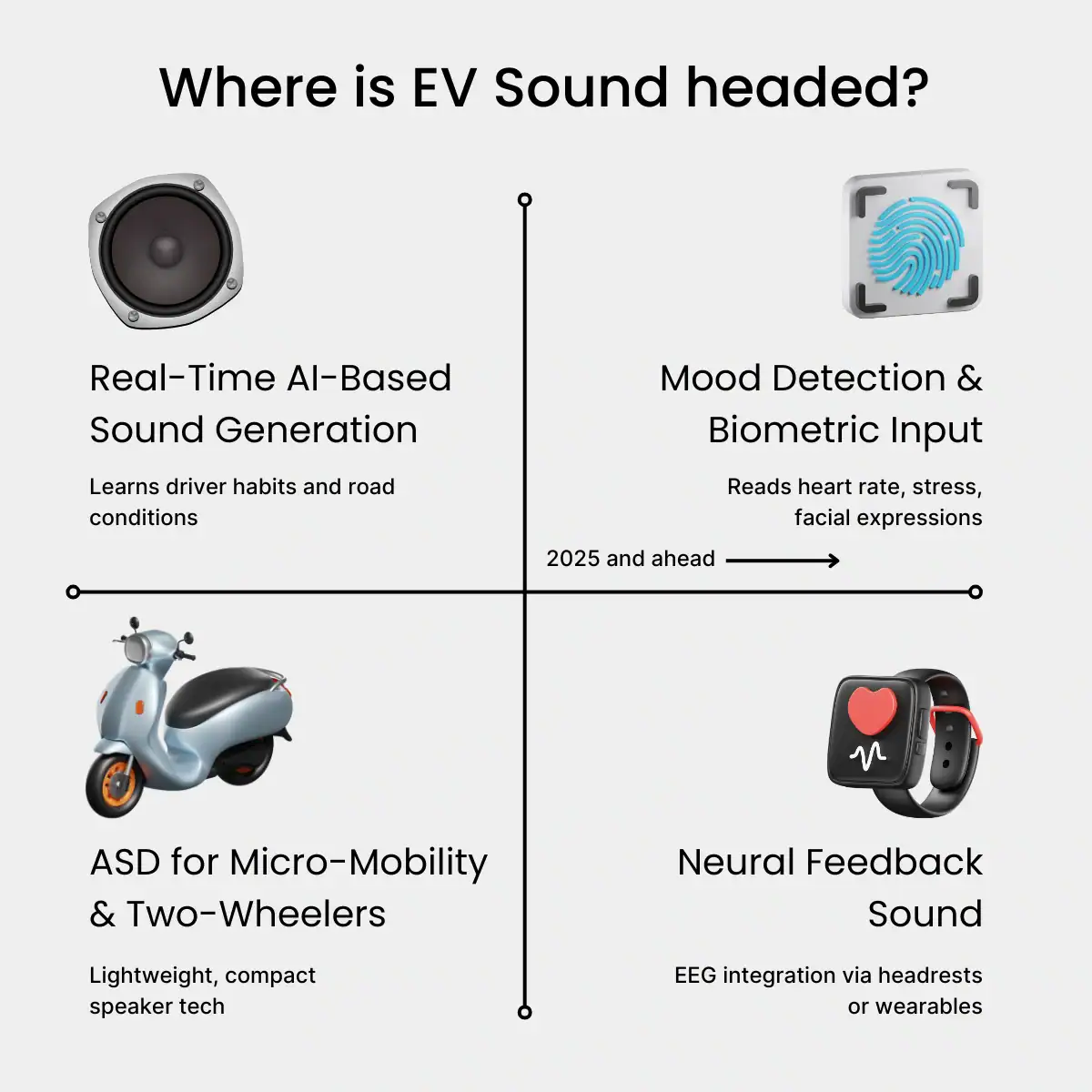
Why simulate engine noise?
Safety first: Regulation such as the EU Regulation No 540/2014 and US NHTSA regulations require new EVs to produce artificial sound at low speed. ASD systems help meet that compliance need.
Emotional experience: Brands treat cabin sound as identity. Firms like BMW (IconicSounds Electric) and Porsche (Taycan Electric Sport Sound) have invested in distinctive EV soundtracks—sometimes with named composers—because performance positioning is partly sonic.
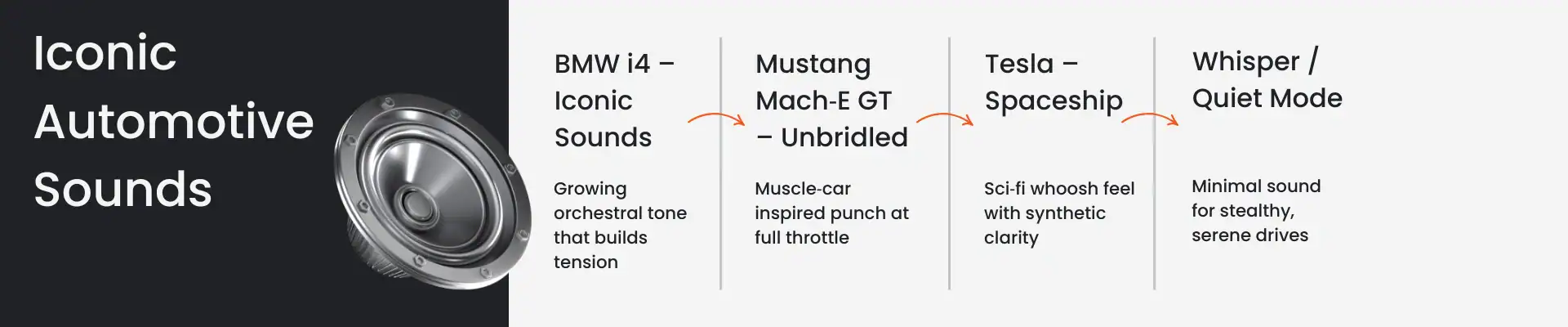
Branding: Audio profiles differentiate models (sci-fi whoosh vs heritage rumble) so marketing and engineering share the same design brief.
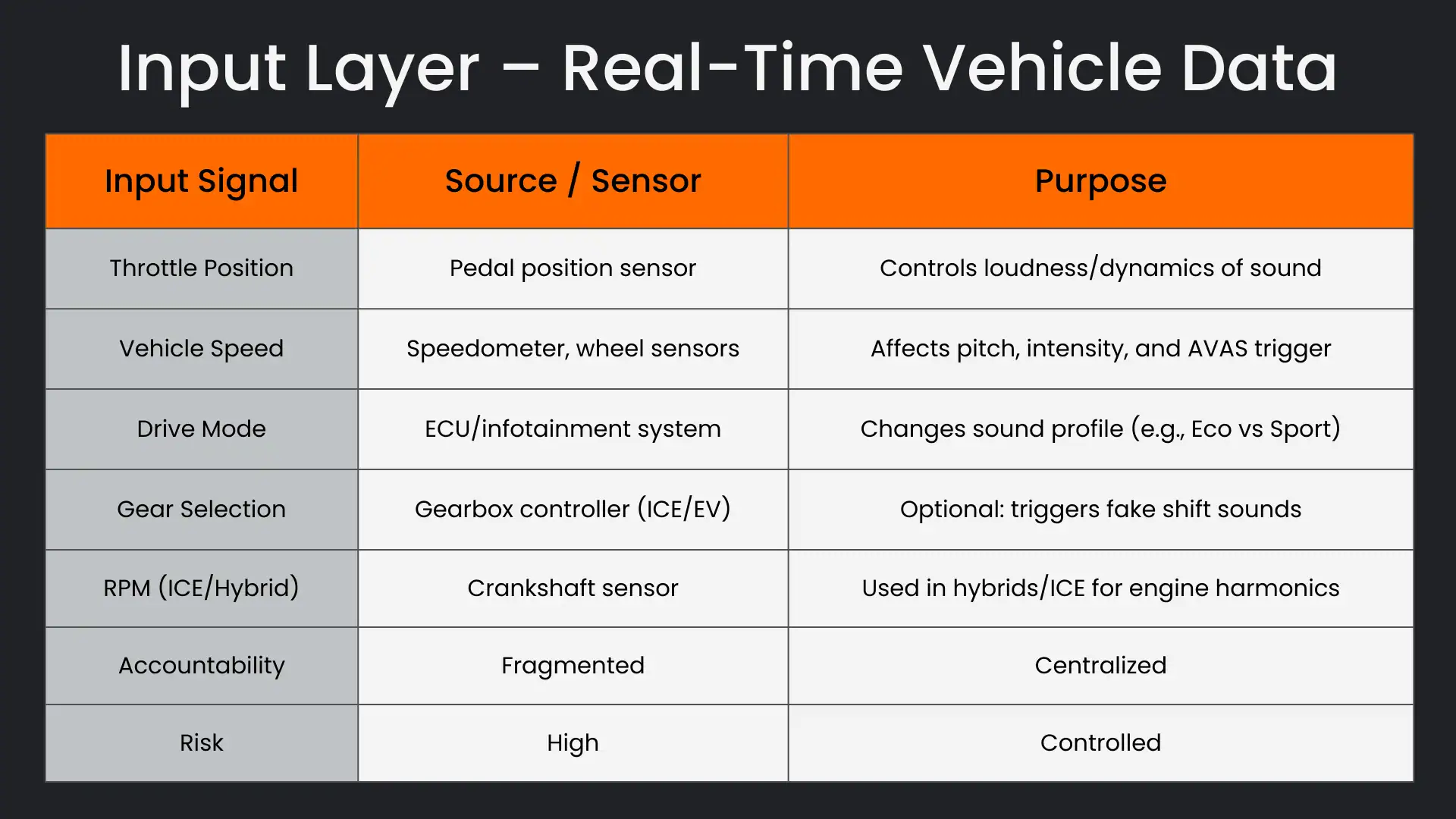
How ASD works (simplified signal chain)
Core pieces: signal-processing hardware (ECU or dedicated DSP), sensor inputs (speed, RPM, throttle, gear), digital sound models (wave tables, granular/FM synthesis), and cabin/external transducers.
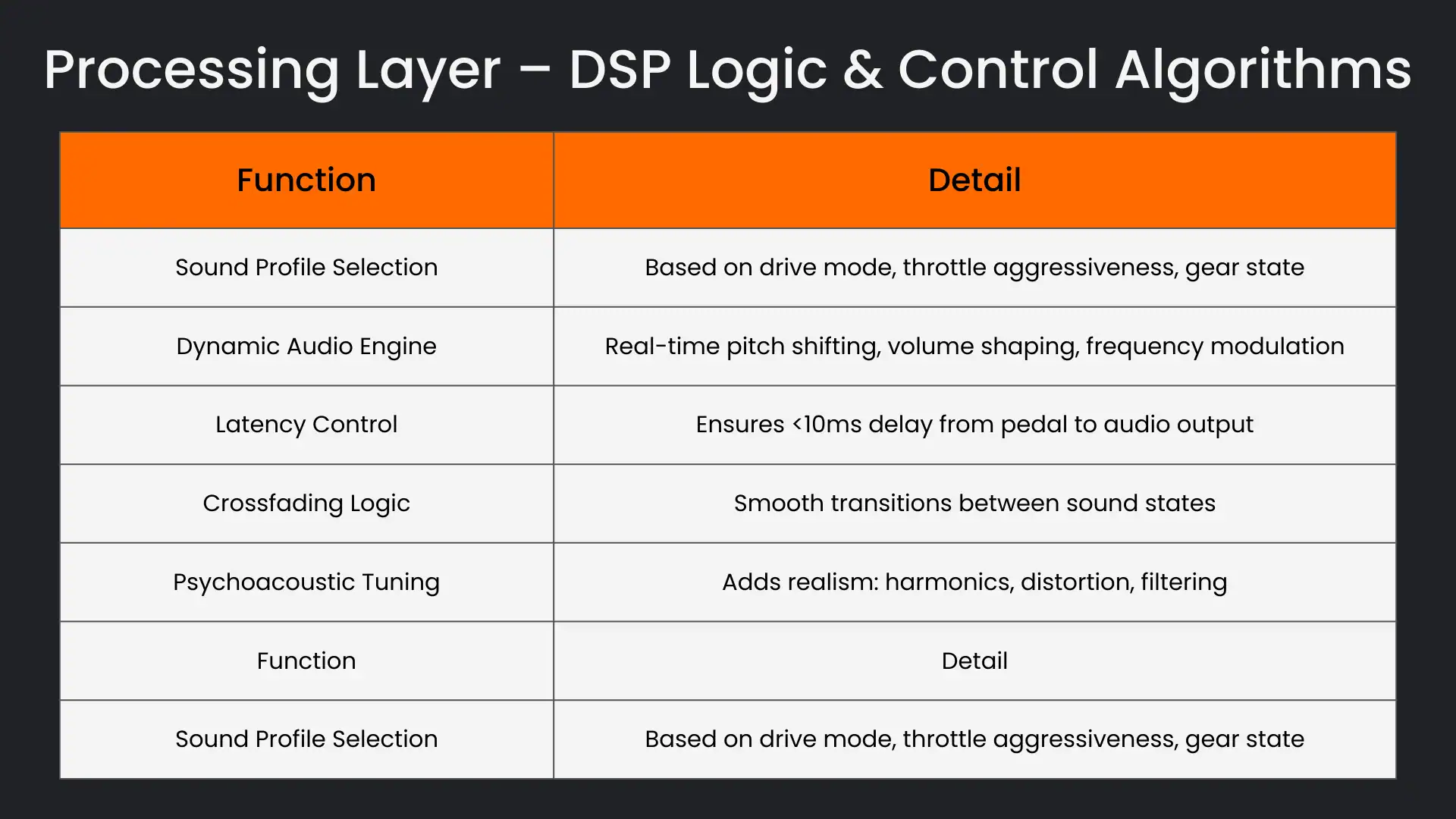
- Driver presses pedal
- ECU supplies speed, torque, drive mode
- Sound processor selects a profile
- Sound is generated/processed in real time
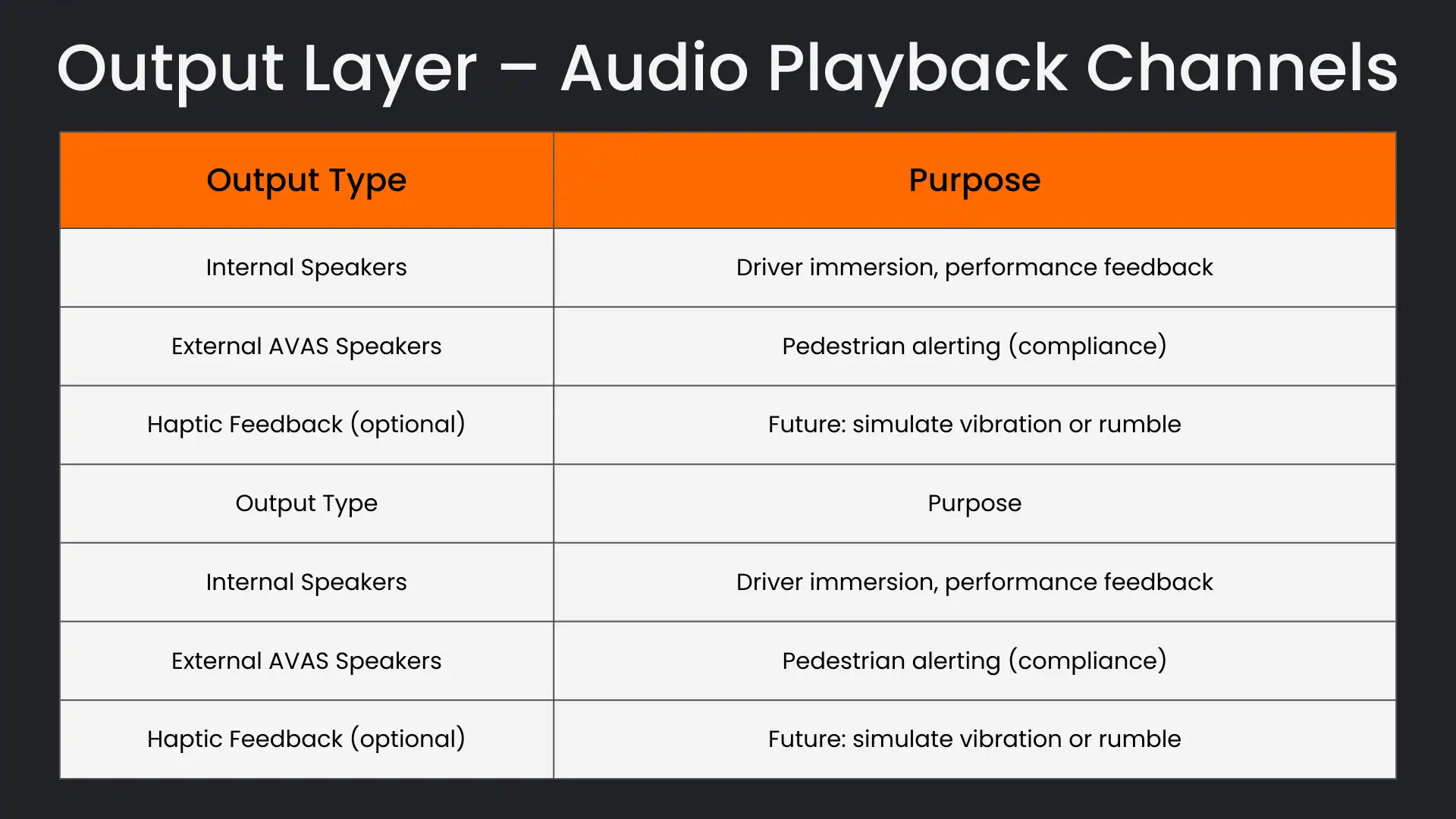
- Output goes to internal and/or external speakers
Want a V8-like rumble from a multi-motor EV? You recreate harmonics and transients carefully so the result does not sound broken.
Product examples
- BMW i4 M50 — Iconic Sounds Electric: acceleration noise that grows more defined with speed.
- Hyundai Ioniq 5 N: themes such as Ignition, Evolution, and Supersonic, including simulated gear shifts.
- Ford Mustang Mach-E: drive modes change the in-cabin soundscape (whisper vs more assertive profiles).
Psychoacoustics that matter
ASD leans on how people perceive sound—not only frequency and amplitude: frequency masking, temporal masking, and spatialisation. Engineers use phase shifting, 3D spatial sound, and HRTFs (Head-Related Transfer Functions) to place rumble where drivers expect an engine.
Engineering challenges
- Latency: lag between pedal and sound breaks the illusion.
- Speakers: cabin systems are rarely designed for ultra-low frequencies.
- Consistency: profiles must track torque and mode changes without glitches.
- Regulation vs brand: AVAS exterior rules and cabin brand sound are related but not identical design problems.
Explore more related content

Software-Defined Vehicles: The Future of Automotive Electronics
Software-Defined Vehicles: The Future of Automotive ElectronicsIn an industry adoption survey, 45 % of automotive OEMs said SDVs are now their top strategic priority, outranking even EV and advanced driver-assist system development. So, if you think your car is just...

Engineering the Illusion of Space in 3D Audio: Signal Science of Spatial Audio & Psychoacoustics
Engineering the Illusion of Space in 3D Audio: Signal Science of Spatial Audio & Psychoacoustics“We treat the human ear like an analog sensor and the brain as the DSP. Our job is to feed it the right illusion.”— Misha Krunic, Head of Acoustic Systems, Harman...

RPA in Automotive
RPA in Automotive Manufacturing: From Manual Tasks to Measurable ROI“By 2025, 50% of all RPA deployments will occur in manufacturing, logistics, and energy sectors.”- Gartner, Future of RPA in Industrial SectorsLet's Talk About Robotic Process Automation, the Robots...