

Edge AI Hardware:
The Engineering Trade-Offs Behind IFA 2026’s Biggest Trend

Global edge AI hardware market at $33.3B in 2026, forecast to reach $81.12B by 2032 | 15.87% CAGR. Source: Edge AI Hardware Market report, ResearchAndMarkets
Walk the halls at IFA Berlin 2026 and you’d be forgiven for thinking every product in the building had suddenly grown a brain. Kitchen appliances identifying what you’re cooking. Wearables translating speech in real time. Vacuum cleaners recognising the difference between a sock and a power cable. AMD used its keynote to make the shift explicit: AI is moving further away from the empty image of cool feature bolted onto a product and becoming the underlying architecture the product is built around.
That’s a neat line for a keynote. It’s a much harder problem once you’re the one holding the bill of materials.
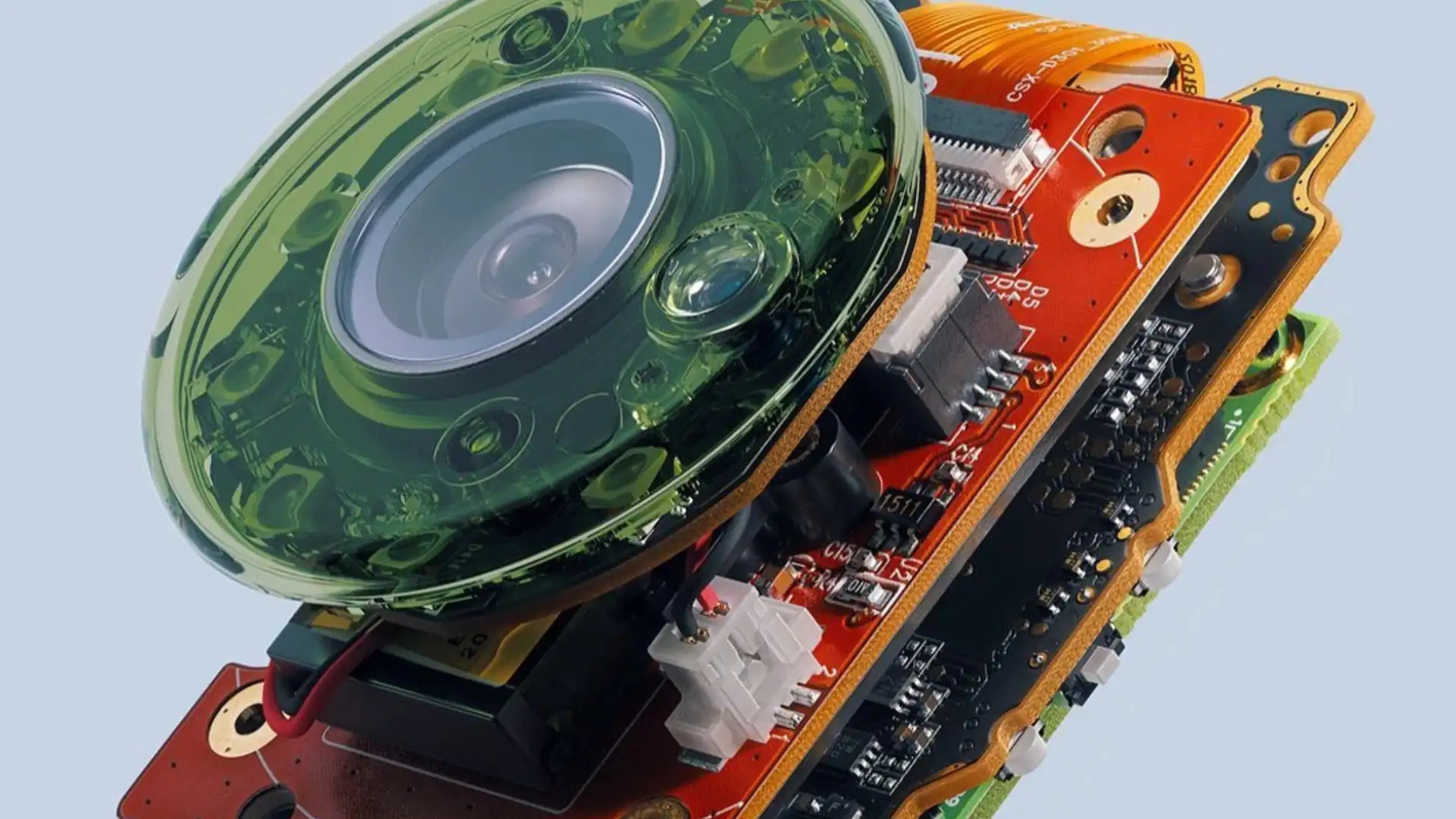
Edge AI hardware, the chips, memory, power circuits and thermal systems that let a device run AI models locally instead of shipping everything to the cloud, is not a software decision dressed up as a hardware one. It changes what the product costs, how hot it runs, how long the battery lasts, and how much rework you’ll need if the model changes six months after tooling is locked. If your team is moving an idea from “the AI works on our demo laptop” to “the AI works on the device we’re about to manufacture,” this is where that idea usually gets expensive.

Gartner forecasts worldwide semiconductor revenue to exceed $1.3 trillion in 2026, with AI semiconductors making up roughly 30% of that total. Rajeev Rajput, Senior Principal Analyst at Gartner: “Amid high demand for AI processing, data center networking and power, and memory price inflation, the semiconductor industry is projected to achieve a third consecutive year of double-digit growth in 2026.
Why edge AI hardware is suddenly everyone’s problem
Running AI on-device instead of in the cloud is not novelty exactly. What’s new is how many product categories are trying it at once. At IFA 2026, panellists from Miele, BSH Home Appliances Group and Tate & Lyle discussed appliances that could eventually identify fabrics and select a wash cycle automatically, or adapt to a household’s changing nutritional needs. Robot vacuums are adding object recognition. Smart glasses are running live translation across dozens of languages on the device itself, and not in a data centre somewhere in a remote location.
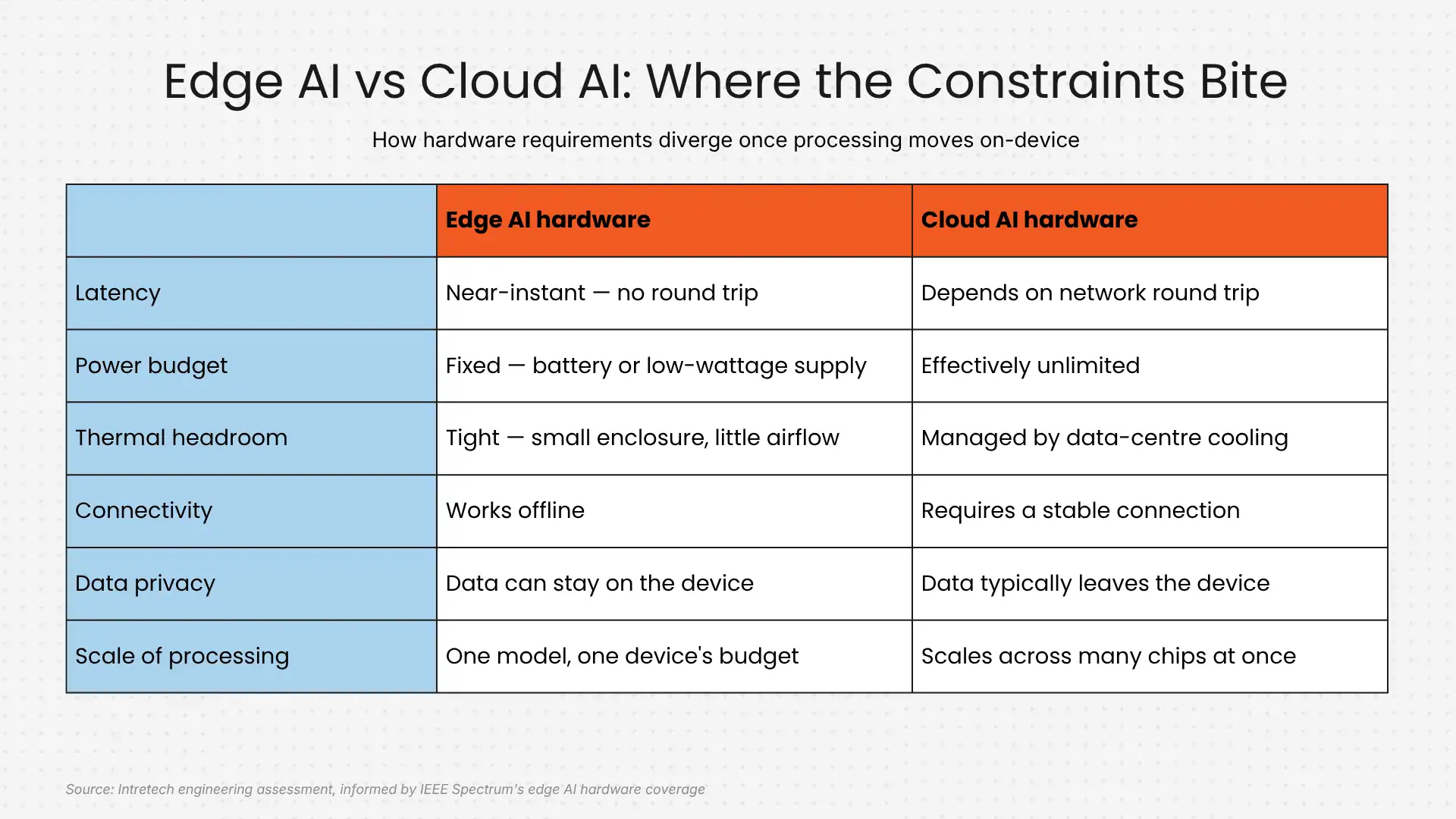
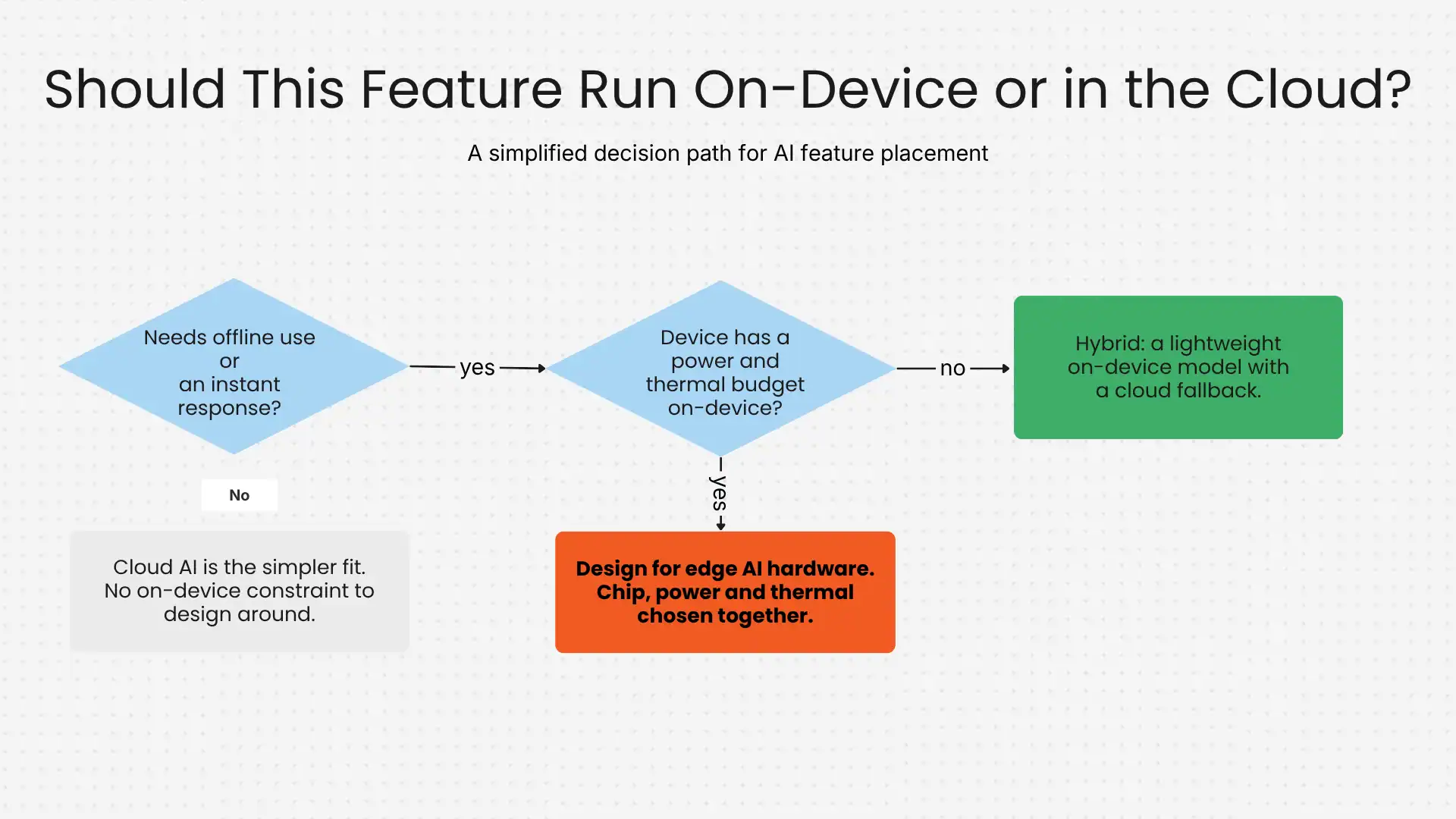
The reason so many categories are converging on the same approach is practical. Sending data to the cloud and waiting for a response adds latency, depends on a stable connection, and raises the exact data privacy questions that IFA’s own panellists flagged as a prerequisite for adoption. Processing locally solves all three. It also means the AI has to fit inside a power and thermal budget that a data centre never has to think about.
Cristiano Amon, CEO of Qualcomm: “the AI race will be won at the edge, where devices, data, and users converge.”
The three trade-offs that actually decide the design
Processing power and memory are the real constraint.
It’s tempting to think of edge AI hardware selection as “pick the fastest chip you can afford.” That’s not how it plays out. As IEEE Spectrum’s engineering coverage of edge AI points out, real-world performance on a device depends as much on how quickly data can move around inside the chip as it does on raw calculation speed. A processor that scores well on paper can still stall in practice if the model keeps having to fetch data from memory rather than working with what’s already close to the processing unit.
This is also why a newer, theoretically more efficient AI model doesn’t automatically perform better on-device. Older, bulkier architectures sometimes outperform their leaner replacements simply because their data flow matches what the target chip was built to handle well. The lesson for hardware teams: choose the chip and the model together, as one decision. A laymen decision would be to choose a two-step process where software picks a model and hardware is asked to make it fit afterwards.
Power budgets shrink fast once AI joins the product
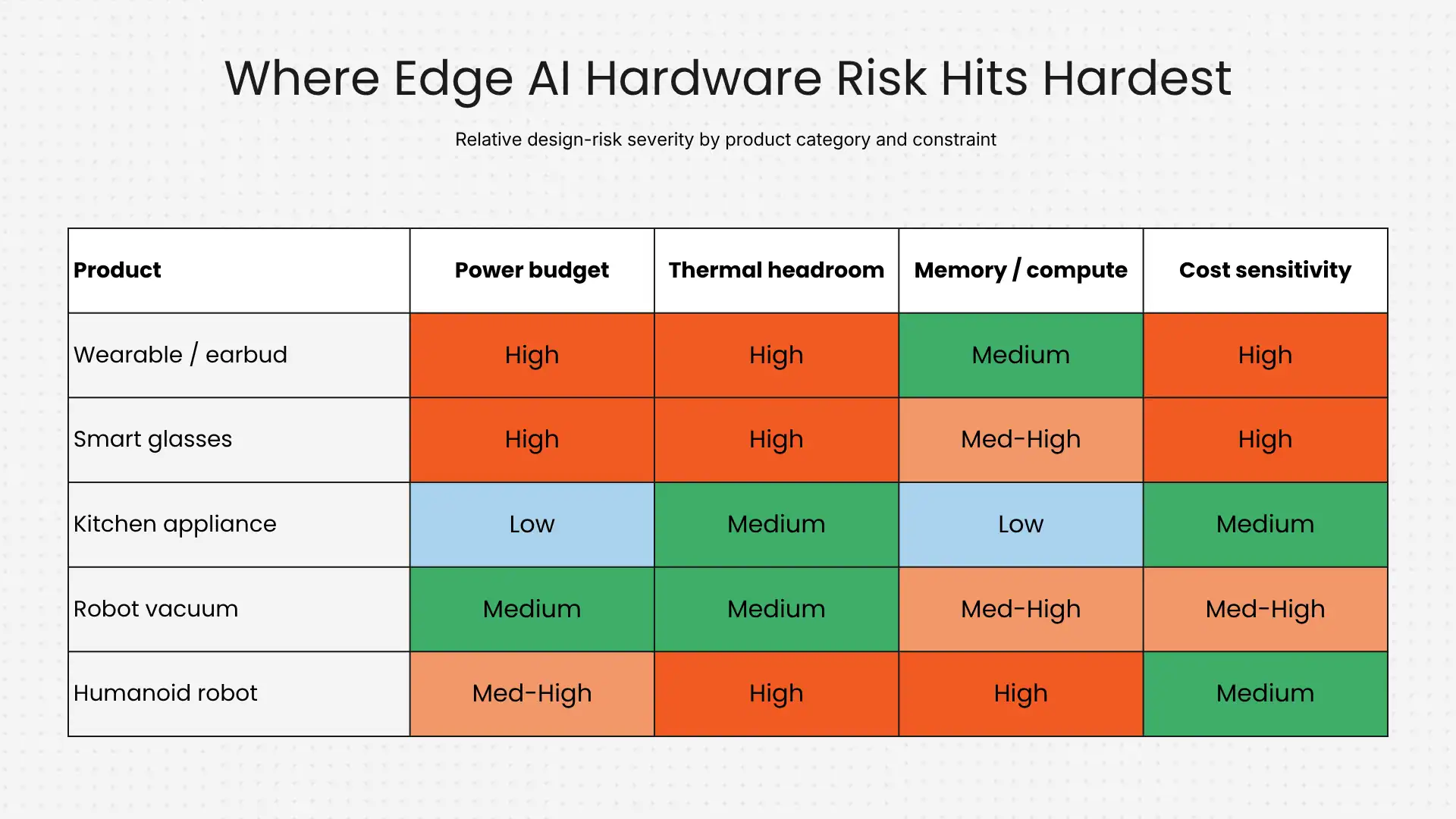
A kitchen appliance plugged into the mains has a very different power budget to a pair of earbuds doing live translation. Battery-powered edge AI products live and die on efficiency: real-time processing on a wearable has to run continuously without draining the battery in an hour. That means every additional AI capability a product team wants has to be weighed against the power it costs.
This is where a lot of early-stage products run into trouble late. A feature that worked fine on a development board with a bench power supply behaves very differently once it’s running on a coin cell or a slim battery pack that also has to power the display, the radio and everything else.
At IFA 2026, RayNeo demonstrated AI-enabled smart glasses with live translation across roughly 40 languages, processed entirely on-device.
Thermal design has to be part of the plan from day one
More local processing means more heat in a smaller enclosure, and consumer products don’t get the luxury of a fan the size of a laptop’s. Miniaturised AI hardware in a wearable, a smart glasses frame or a compact kitchen device has almost no room for heat to escape, which means thermal management has to be designed in from the earliest stages. Getting this wrong means the chip slows itself down to avoid damage, and the AI feature you promised on the box gets worse in the customer’s hands.
What this means for your bill of materials
Every trade-off above shows up on the bill of materials eventually, usually later than anyone would like. A chip upgraded to handle a heavier model can push a product past its target cost. A thermal fix added after the first prototype throttles often means a new enclosure. A battery swapped in to buy back runtime can change the product’s weight and shape enough to need new tooling. None of these are software problems anyone can patch their way out of, which is exactly why they’re worth getting right before the design is frozen rather than after.
Dwith Chenna, R&D engineer at AMD, writing in IEEE Spectrum: edge devices “operate within strict constraints on processing power, memory, and battery life” — useful to ground the hardware trade-off section, though this is his framing in the piece rather than a spoken quote.
What this means if you’re building the product, instead of watching the trend
None of this is a reason to avoid on-device AI. IFA 2026 made a reasonable case that customers want it: less latency, less reliance on connectivity, and more control over their own data. What it does mean is that the decision to add edge AI to a product has to happen at the same table as the decision about chip selection, enclosure design and power architecture.
That’s the gap a contract design and electronics manufacturing partner is built to close. An engineering team that’s already solved the chip-versus-thermal-versus-power trade-off for other clients can tell you early whether your AI feature is compatible with your enclosure, your battery target and your unit cost, rather than finding out after tooling is committed. We’ve walked hardware teams through exactly this kind of trade-off analysis on IoT products headed into demanding environments, where the constraints are just as tight and there’s no room to redesign after launch (see our piece on the [engineering trade-offs behind IoT hardware for precision agriculture]). Procurement teams evaluating a manufacturing partner for an AI-enabled product should ask to see that thinking directly.

“Edge AI hardware” gets 720 monthly US searches, more than double any other manufacturing-partner term tracked. Source: Semrush keyword data, US database, Sept 2026
Frequently asked questions
What hardware powers edge AI?
Edge AI runs on a combination of a specialised processor (often an NPU or AI accelerator alongside a general-purpose chip), enough local memory to hold the model and its working data, and a power and thermal system sized to keep that processor running without overheating or draining the battery. The right combination depends entirely on the product: a mains-powered kitchen appliance and a battery-powered earbud need very different answers.
How do you deploy an AI model on edge hardware without a full redesign later?
The safest approach is to choose the chip and the model together early, rather than finalising the hardware first and asking software to make the model fit. Testing the model on representative hardware, early in the process catches memory and power mismatches before they turn into a costly late-stage redesign.
What’s the difference between edge AI and cloud AI hardware requirements?
Cloud AI hardware is built around near-unlimited power and cooling and can scale processing across many chips. Edge AI hardware has to deliver useful performance within a fixed power budget, a fixed thermal envelope and, often, a battery, which is why the same AI model can behave very differently once it moves from a data centre to a handheld or wearable device.
Why do older AI models sometimes run better on edge hardware than newer ones?
Performance on-device depends on how well a model’s data flow matches the way the target chip moves data internally. An older architecture that fits the chip’s design well can outperform a newer, leaner model that constantly forces the chip to fetch data from memory.
What should procurement ask before committing to an edge AI product?
Ask whether chip selection, thermal design and power budgeting have been tested together on hardware close to the final product, instead of validating separately or on a development board. A manufacturing partner should be able to show where those three decisions were made jointly and what trade-offs were accepted along the way.
Talk to Intretech about your next hardware design
If your product roadmap now includes on-device AI, the earlier your chip, thermal and power decisions are tested together, the fewer surprises you’ll find after tooling. Book a free consultation with Intretech’s engineering team to work through your design before it’s locked in.
Explore more related content

Physical AI vs Traditional Automation: How to Know Which One Your Production Line Actually Needs
Physical AI vs Traditional Automation: How to Know Which One Your Production Line Actually NeedsEvery automation...

5 Physical AI Use Cases Already Live on Manufacturing Lines (And What They Actually Cost)
5 Physical AI Use Cases Already Live on Manufacturing Lines (And What They Actually Cost)Most content about physical...
What Is Physical AI? A Manufacturer’s Guide to the 2026 Shift From Automation to Autonomy
What Is Physical AI? A Manufacturer's Guide to the 2026 Shift From Automation to AutonomyEvery few years,...