

What Is Physical AI?
A Manufacturer’s Guide to the 2026 Shift From Automation to Autonomy

Every few years, manufacturing gets a new word to argue about. Lean. Industry 4.0. Smart factories. In 2026, the word is “physical AI,” and it’s already doing what every hyped-up term does: getting attached to products that have nothing to do with it, and getting ignored by the people who could actually use it properly.
That’s a problem, because underneath the marketing noise, something real is happening on production floors. This guide cuts through the noise: what physical AI actually is, why 2026 is genuinely different from previous automation waves, and more usefully what it means for a manufacturer trying to decide where to spend next year’s automation budget.
What “Physical AI” Actually Means
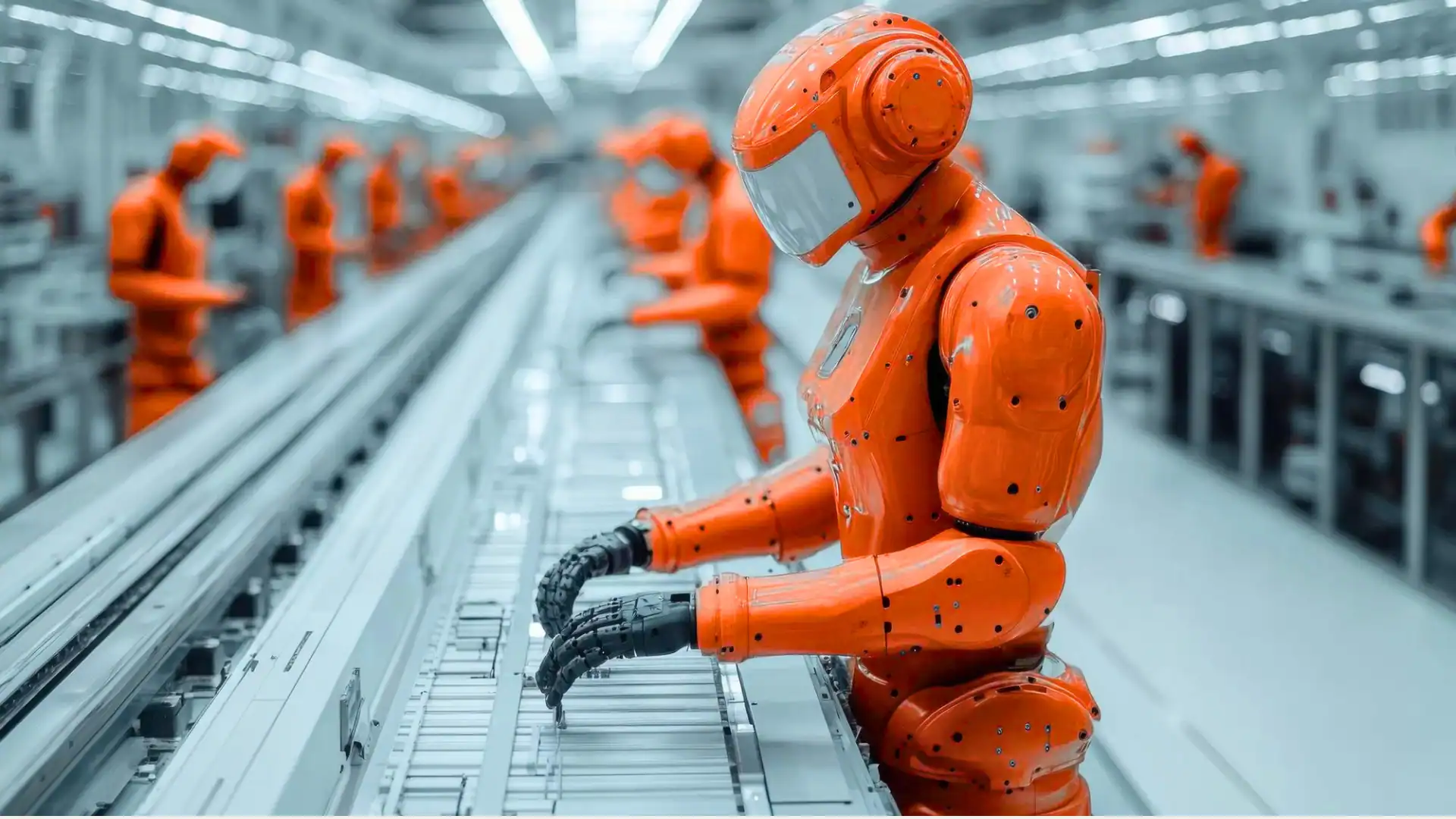
Physical AI is the term the industry has settled on for machines that combine artificial intelligence with a physical body robots, cobots, autonomous mobile units that can perceive their environment, make decisions, and act on them without being told exactly what to do step by step.
That’s a meaningful departure from how most factory automation has worked for the last thirty years. Traditional industrial robots are precise but rigid: they repeat the same programmed motion thousands of times a day and fail the moment something outside their script shows up a part in the wrong position, a slightly different product variant, a human standing somewhere unexpected. Physical AI systems are built to handle exactly that kind of unpredictability, using the same generation of AI models that power chatbots and image generators, but pointed at cameras, sensors, and robotic arms instead of text boxes.
Nvidia’s CEO Jensen Huang put it bluntly at CES 2026: this is “the ChatGPT moment for physical AI.” Whether or not you think that’s overblown marketing (and it’s worth being skeptical of anything a chip company says about its own market), the underlying claim is testable and increasingly true. Robots are getting measurably better at generalising across tasks they weren’t explicitly trained on, which is the entire point.
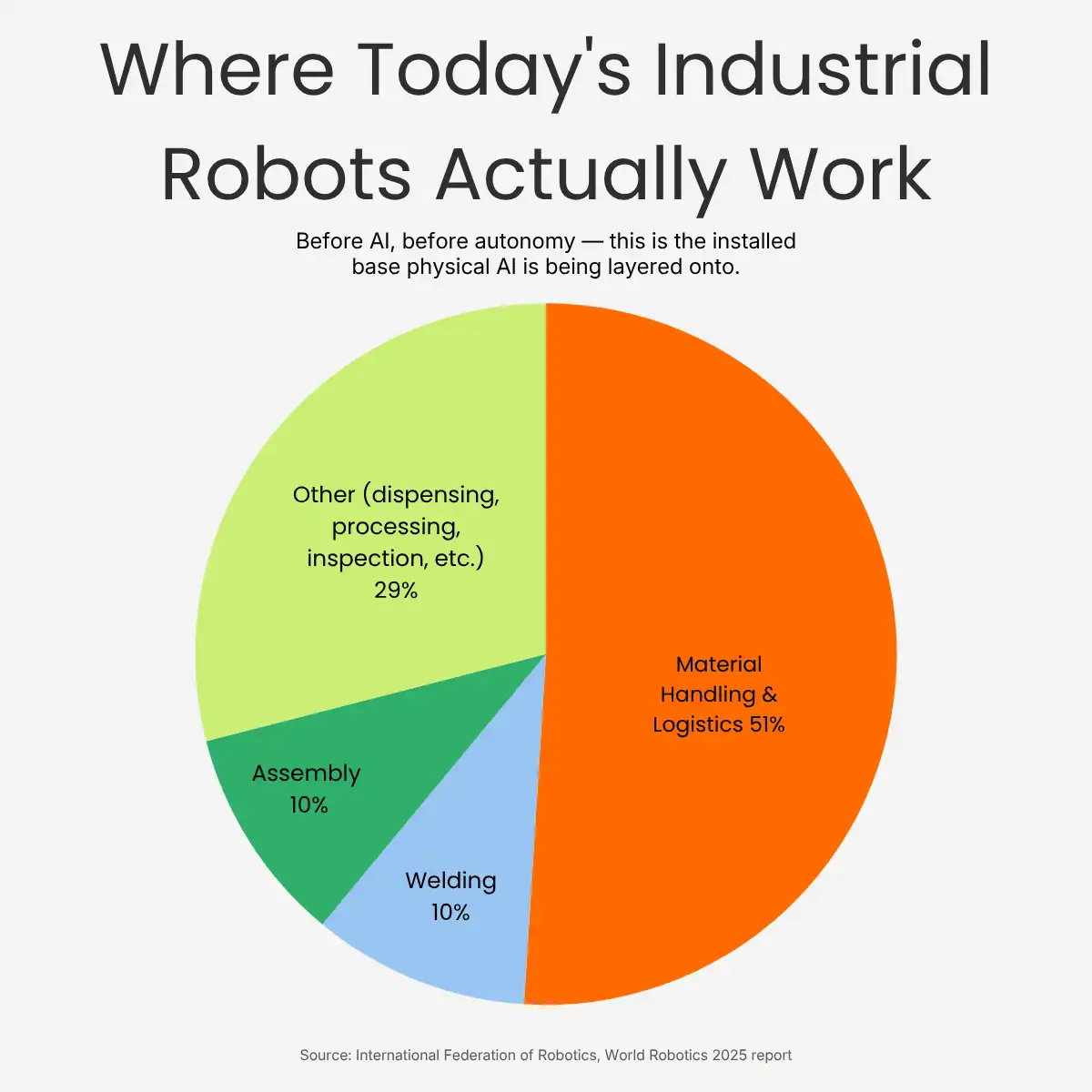
“51% of the world’s industrial robots are already doing material handling and logistics work, the same job leading physical AI’s autonomous-mobile-robot rollout today.” Source: International Federation of Robotics, World Robotics 2025 report.
Physical AI vs Robotic Process Automation (RPA)
This is where most of the confusion starts, and it’s worth being direct about it: physical AI and RPA are not the same thing, and if you’ve been searching for one and finding content about the other, that’s not you doing anything wrong it’s a genuinely messy corner of the internet.
RPA is software. It automates digital, rules-based tasks invoicing, data entry, moving information between systems and it has nothing to do with physical machinery. Physical AI is the opposite end of the spectrum: it lives on the factory floor, in metal and sensors, moving actual parts. If your business problem is “our back-office processes are slow,” you want RPA vendors, not an automation integrator. If your problem is “our production line can’t handle variation,” physical AI is the relevant category.
Physical AI vs Traditional Industrial Robotics
The more useful comparison is against the industrial robots most manufacturers already have on their lines. Traditional robotics runs on fixed programming: brilliant at one repeated motion, useless the moment conditions change. Physical AI systems add perception and decision-making on top of that same physical hardware category meaning many of the differences show up in software and sensors, not in a completely different class of machine.
That distinction matters for budgeting. You’re rarely choosing between “buy a robot” and “buy physical AI” as two separate purchases. More often, it’s a question of how much intelligence to build into the automation you were already planning to install.
|
Traditional Industrial Robotics |
Robotic Process Automation (RPA) |
Physical AI |
|
|
Where it operates |
Factory floor, physical hardware |
Software, digital systems |
Factory floor, physical hardware |
|
How it decides |
Fixed, pre-programmed sequence |
Fixed, rules-based scripts |
Perceives and adapts to variation |
|
Handles unexpected input? |
No — stops or fails |
No — breaks on exceptions |
Yes, within trained limits |
|
Typical cost |
Lower per unit deployed |
Low (software licensing) |
Higher per unit deployed |
|
Best fit |
Stable, high-volume, low-variation |
Repetitive digital/office tasks |
Variable, high-mix, high-consequence-of-failure production |
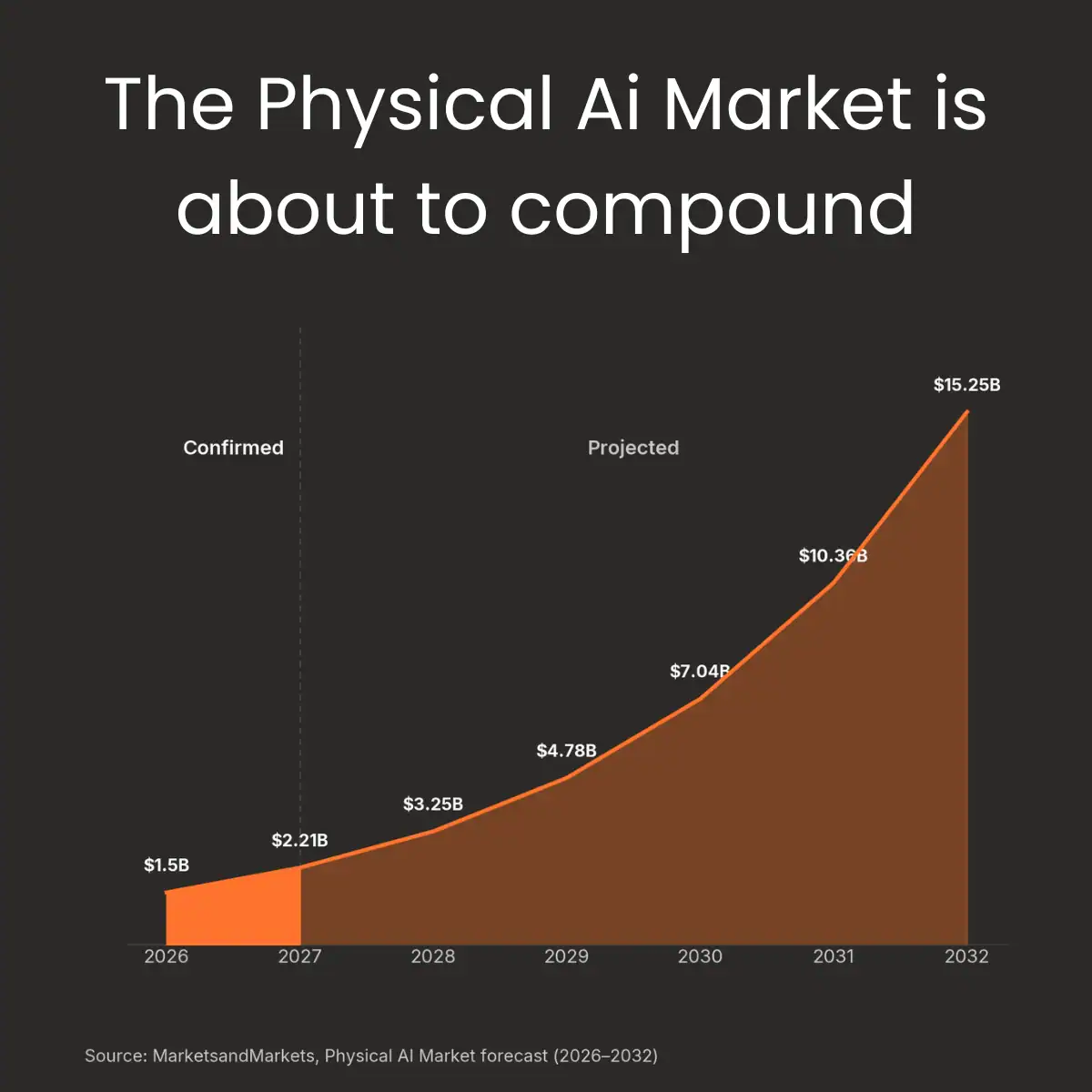
From $1.5B in 2026 to a projected $15.24B by 2032, a 47.2% compound annual growth rate.” Source: MarketsandMarkets, Physical AI Market forecast (2026–2032).
How Physical AI Actually Works
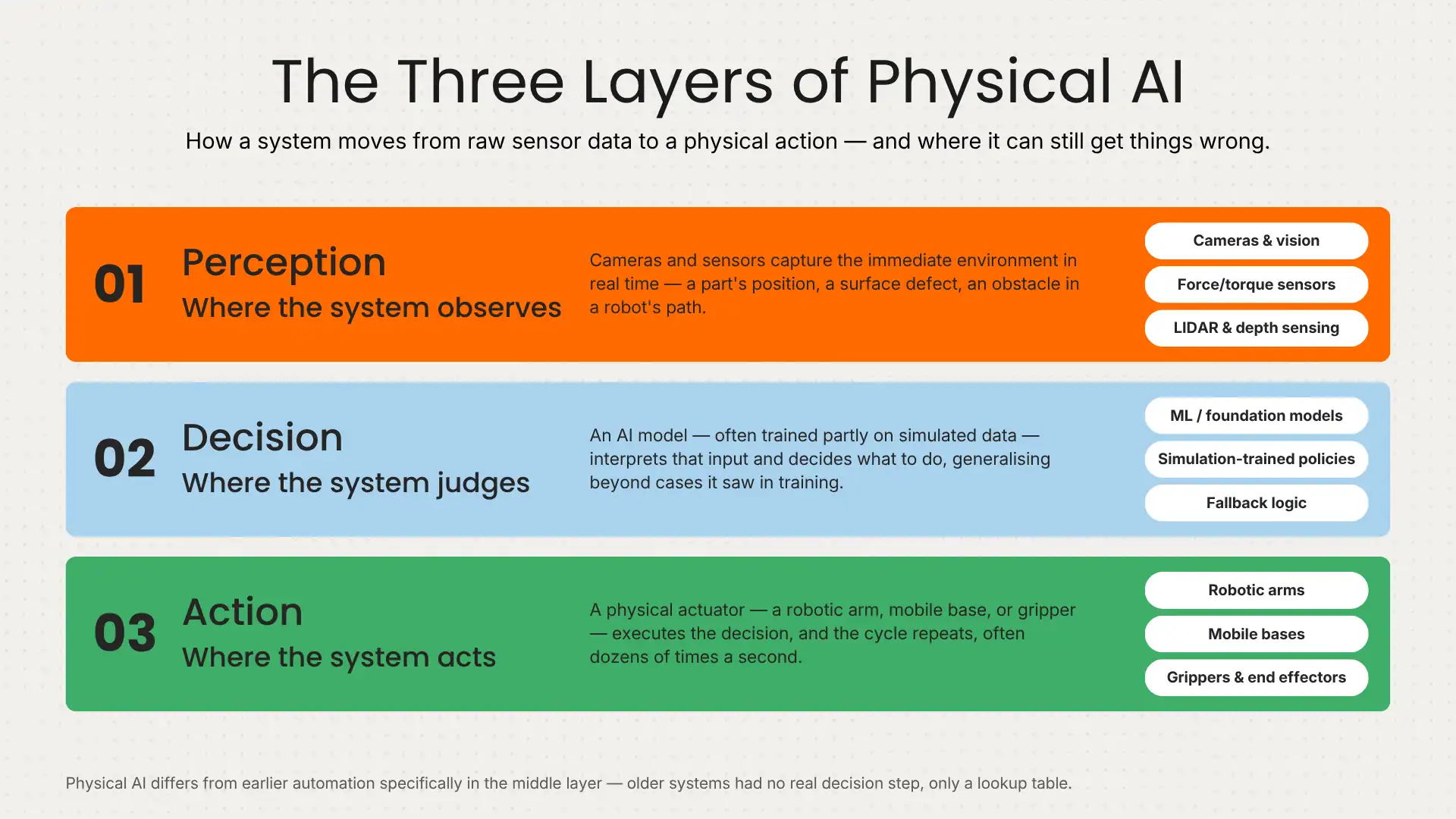
Strip away the branding and a physical AI system is built from three layers working in a loop: perception, decision, and action. Sensors and cameras gather data about the immediate environment a part’s position, a surface defect, an obstacle in a robot’s path. An AI model, often trained partly on simulated data rather than purely on real-world examples, interprets that input and decides what to do. A physical actuator a robotic arm, a mobile base, a gripper then executes the decision, and the cycle repeats, continuously, often dozens of times a second.
The meaningful shift from earlier automation is in that middle step. Older systems didn’t have a decision layer in any real sense they had a lookup table. If the input matched a known case, the system acted; if it didn’t, the system stopped. Physical AI’s decision layer generalises, which is why it can handle a part that’s slightly rotated, slightly discoloured, or slightly out of position without a human reprogramming it for that specific case. The tradeoff is that “generalises” is not the same as “never wrong,” which is precisely why fallback behaviour and human oversight remain necessary rather than optional.\\
Nvidia CEO Jensen Huang, CES 2026: “This is the ChatGPT moment for physical AI.”
Why 2026 Is Being Called the Inflection Point
Three things are converging that make this year different from the general AI hype of the last few years.
First, the hardware caught up. Global industrial robot installations passed 500,000 units annually for the fourth consecutive year, with the installed base now valued at $16.7 billion the scale needed to make AI-driven variants commercially viable rather than lab experiments International Federation of Robotics, IFR 2026 Global Robotics Trends.
Second, the major industrial vendors moved from research to product. ABB unveiled new industry-ready physical AI systems at Automate 2026 in June, and multiple analysts are now tracking humanoid and mobile robot deployments as a distinct, fast-growing category rather than a novelty.
Third and this is the part that actually affects budgets around 22% of manufacturers now say they plan to use some form of physical AI, including autonomous mobile robots and robotic sorting systems, by 2027. That’s no longer early-adopter territory. That’s a meaningful minority of your competitors already planning next year’s capital spend around it.
“Mexico is now the United States’ top trading partner, driven largely by nearshoring.” Source: Bain & Company nearshoring research (2026); IFR World Robotics 2025.
What This Means for Manufacturers Right Now
Here’s the part most physical AI coverage skips: what do you actually do with this information if you run a production line, rather than a chip company or an analyst desk?
The Reshoring Connection
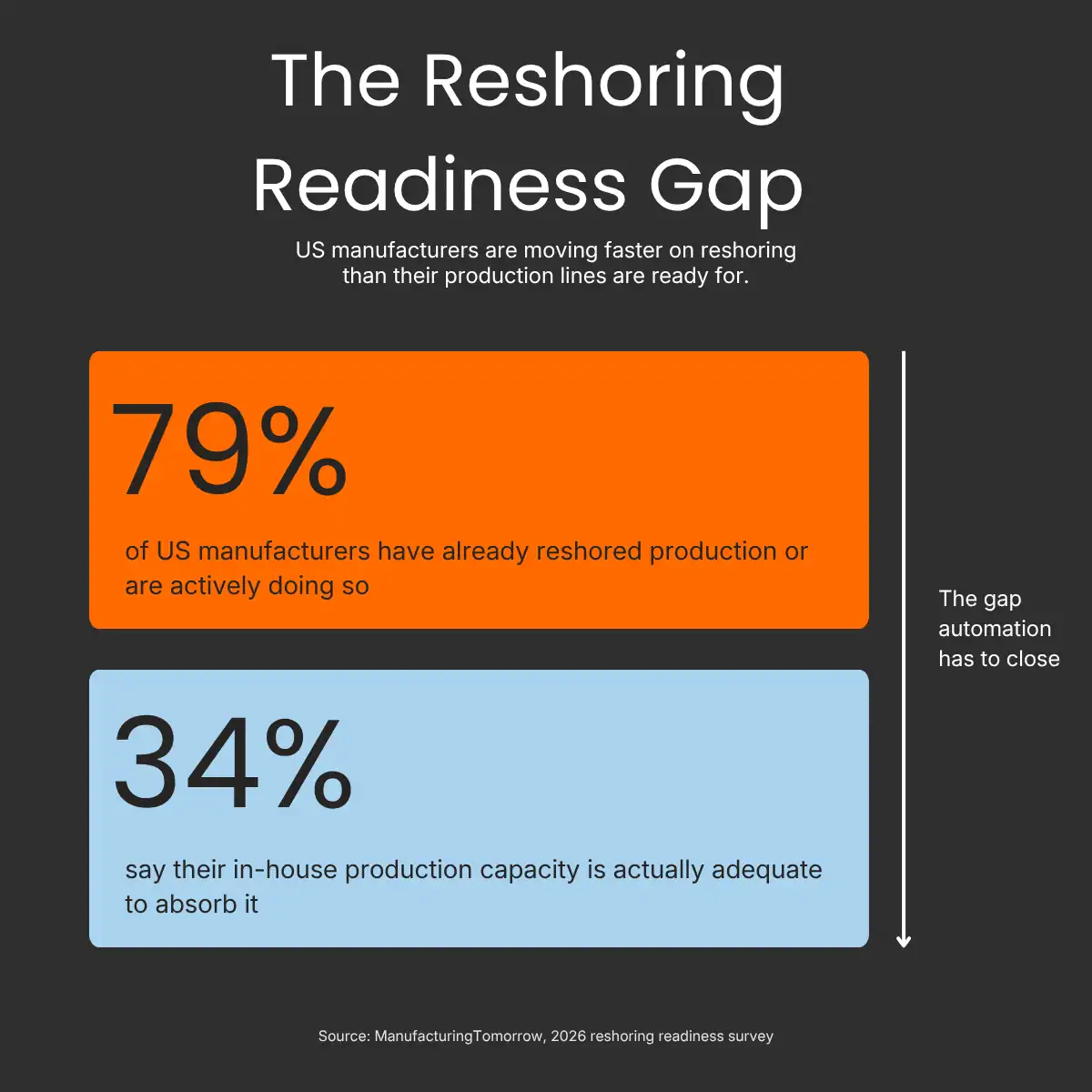
If your business has been weighing a move back to domestic or nearshore production and a lot of manufacturers have been, given tariff pressure and supply chain risk over the last two years labor cost is usually the number that kills the plan. Domestic labor is more expensive than the overseas alternative you’re moving away from, full stop.
Automation is the only lever that changes that math, and physical AI changes it further by handling the variable, low-volume, high-mix production runs that reshored operations often need to run the kind of work that doesn’t justify a traditional fixed-automation line but is exactly the kind of variability physical AI is designed for. This is why the reshoring conversation and the physical AI conversation are, in practice, the same conversation for a growing number of manufacturers.
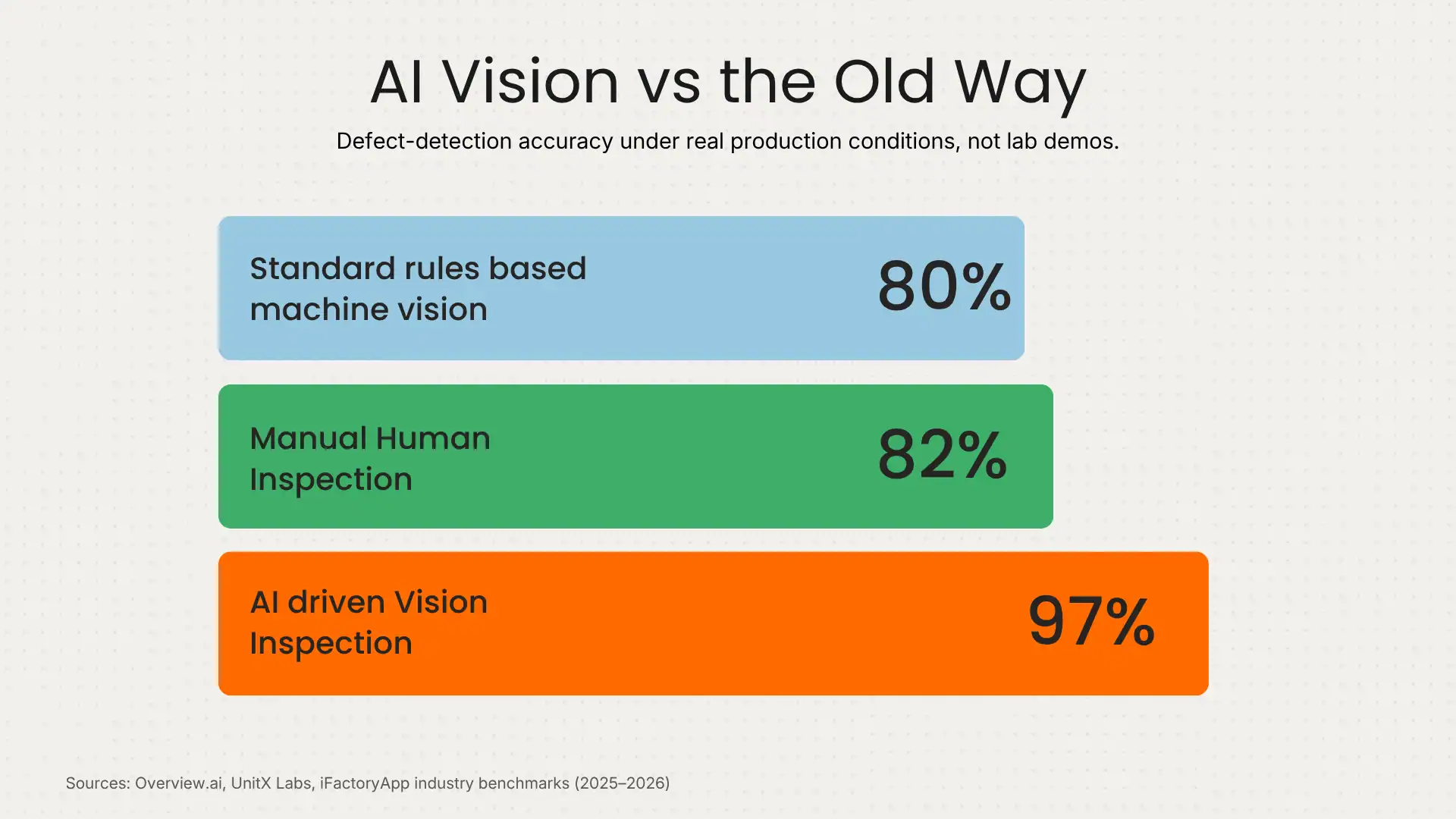
“AI-driven vision inspection is hitting 97% defect-detection accuracy under real production conditions versus 82% for manual inspection and 80% for standard rules-based machine vision.” Source: Overview.ai, UnitX Labs, iFactoryApp industry benchmarks (2025–2026)
Where It’s Already Being Used
In practice, the current wave of physical AI deployment clusters around a few use cases: autonomous mobile robots handling line-side logistics, vision-guided systems doing quality inspection that used to require a human eye, and predictive maintenance sensors that flag equipment issues before they cause downtime. We’ve broken these down in more detail, with real cost ranges, in our guide to the five physical AI use cases already running on manufacturing lines.
These use cases show up most in consumer electronics, medical device manufacturing, and industrial equipment sectors with either tight tolerances, frequent product changeovers, or both. If that sounds like your production environment, you’re in the segment where this technology is furthest past the hype stage.
In consumer electronics, the driver is usually product velocity: new SKUs and variants launch faster than fixed automation can be reprogrammed for, so vision-guided inspection and adaptive assembly earn their cost premium through sheer changeover frequency. In medical device manufacturing, the driver is consequence of failure tolerances are tight enough, and the cost of a field failure severe enough, that AI-driven testing and inspection pay for themselves by catching what a rules-based system would miss. In industrial equipment production, the driver is often the reshoring pattern described above: lower-volume, higher-mix runs that don’t justify a dedicated fixed line, but do justify a more flexible one.
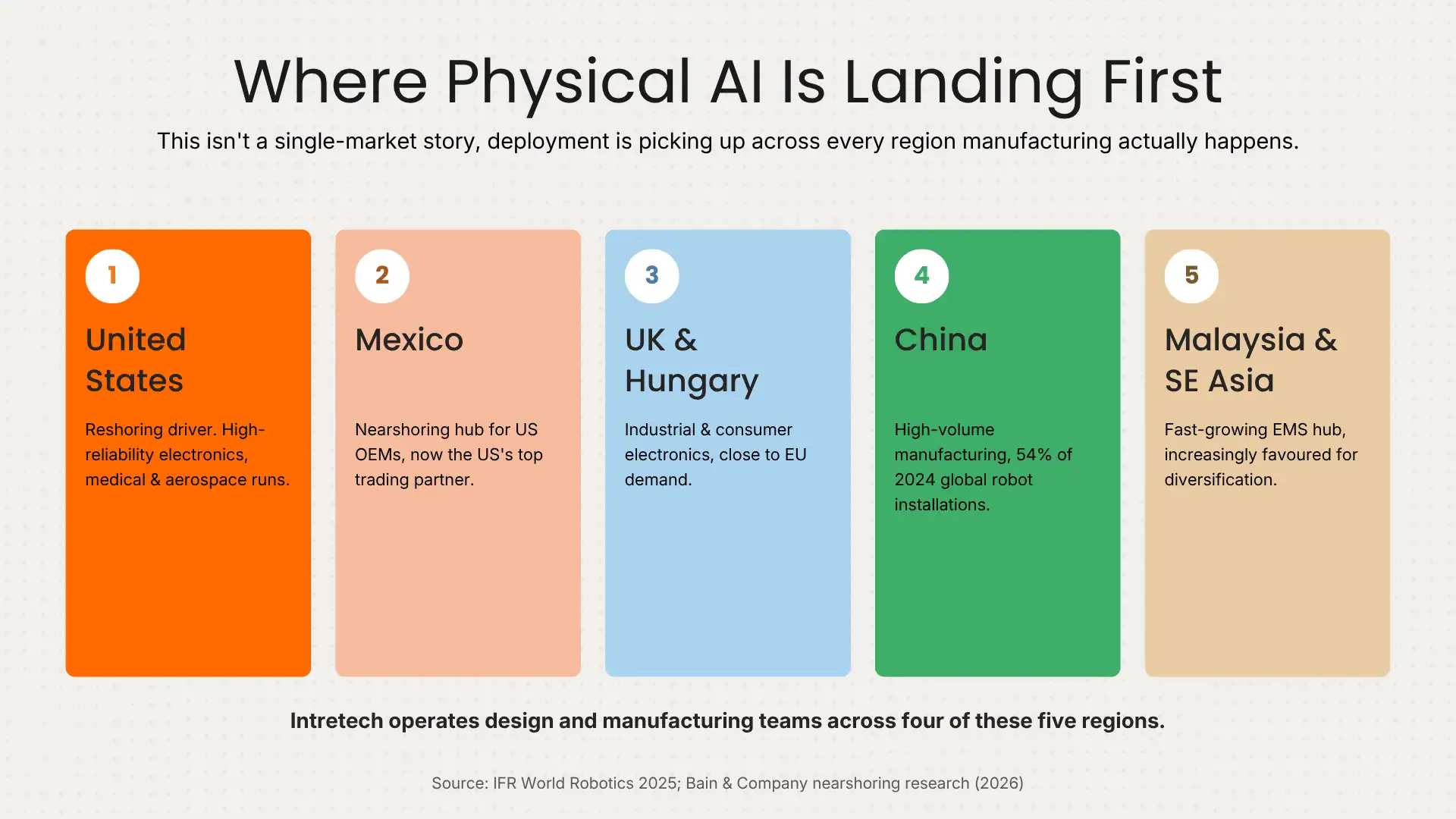
“Mexico is now the United States’ top trading partner, driven largely by nearshoring.” — Source: Bain & Company nearshoring research (2026); IFR World Robotics 2025.
The Risks of Buying Into the Hype
None of this means you should be signing a purchase order this quarter. A fair amount of what gets marketed as “physical AI” right now is traditional automation with an AI label bolted on for the sales deck. That’s not a reason to dismiss the category it’s a reason to ask sharper questions before you buy.
Ask what happens when the system encounters something genuinely novel, not just a pre-tested variation. Ask for a real accuracy or defect-detection rate under your actual production conditions, not a vendor’s lab demo. And ask what the fallback is when the AI gets it wrong because it will, at some rate, and a production line without a sensible fallback is a liability, not an upgrade.
The honest answer, most of the time, is that traditional automation is still the right call for high-volume, low-variation work, and physical AI earns its cost premium specifically where variability is the problem you’re trying to solve. We’ve laid out a fuller decision framework in our guide to choosing between physical AI and traditional automation, including the questions worth asking before any vendor conversation.
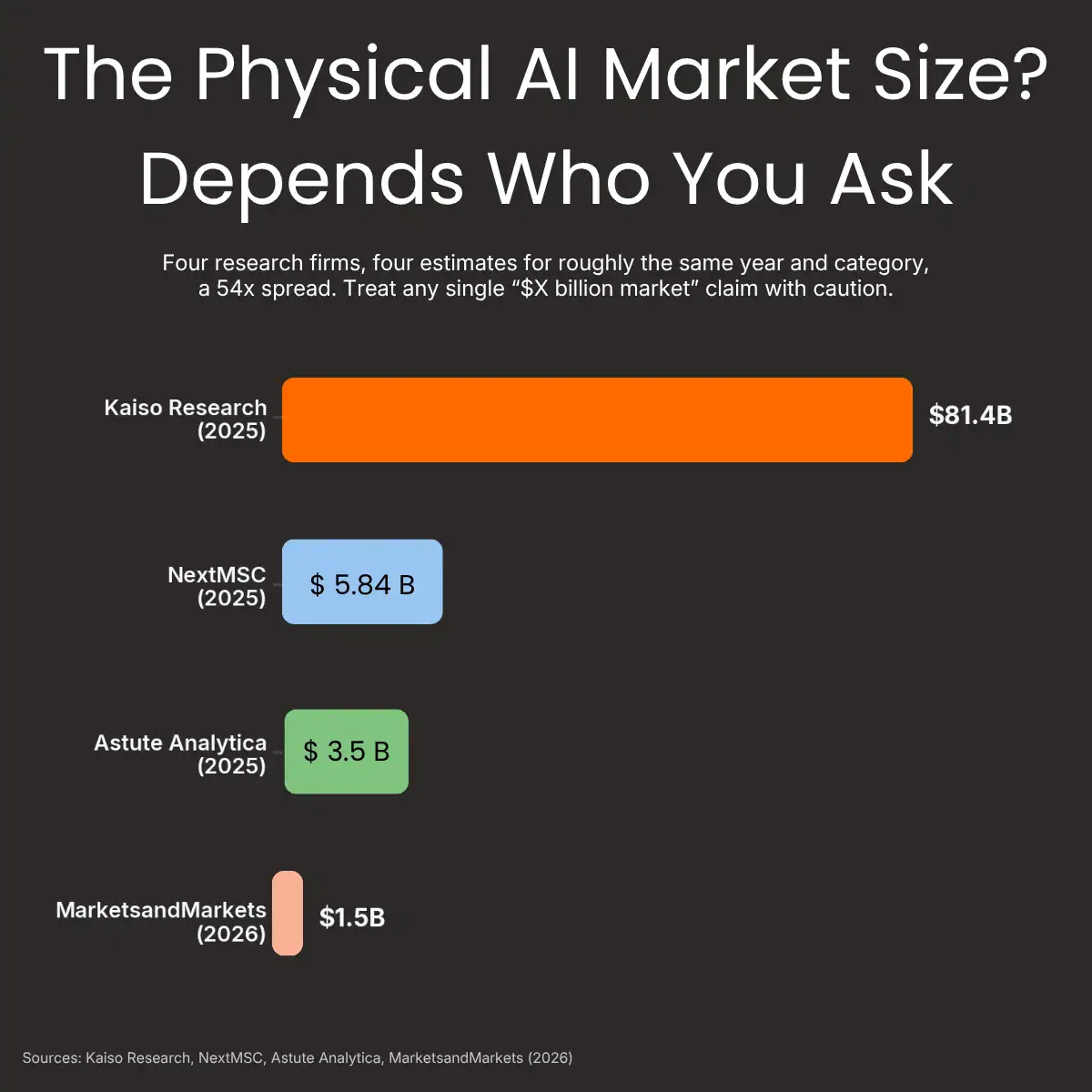
“Four research firms, four estimates for the same year and category; a 54x spread between the highest ($81.4B) and lowest ($1.5B) physical AI market-size estimate.” Source: Kaiso Research
How to Evaluate Physical AI for Your Production Line
If you’re at the point of actually assessing this for your own operation, four questions do most of the work:
How much genuine variability does your line handle? High product-mix, low-volume, or frequently changing runs are where physical AI’s flexibility pays for itself. Long, stable runs of a single product usually don’t need it.
What’s your labor cost trajectory? If reshoring, a tightening local labor market, or rising wage costs are part of your planning, the case for autonomy strengthens regardless of the AI label.
Can you pilot before you commit? Any credible integrator should be able to run a bounded pilot on a single line or workstation before you commit to a full rollout. If a vendor pushes you straight to full deployment, that’s worth questioning.
Who’s actually installing and supporting it? The AI model is the least differentiated part of most systems right now. The integration work getting it to actually run reliably on your specific line, with your specific parts is where projects succeed or fail.
Intretech works through exactly this evaluation with manufacturers across consumer electronics, medical, and industrial sectors, building and deploying automation lines in under six months with an average return on investment inside twelve with or without an AI label attached to the hardware. If you’re weighing where physical AI fits in your own operation, book a free consultation with our automation engineering team and we’ll give you a straight answer, including if the honest answer is “not yet.”
Frequently Asked Questions
What is physical AI?
Physical AI refers to robots and autonomous machines that combine artificial intelligence with sensors and physical hardware, allowing them to perceive their surroundings, make decisions, and act without being explicitly programmed for every scenario. It’s distinct from software-only AI and from traditional fixed-program industrial robots.
How is physical AI different from robotic process automation (RPA)?
RPA automates digital, software-based tasks like data entry and invoicing it has no physical component. Physical AI operates in the real world through robots and sensors on production lines. The two terms get confused constantly, but they solve entirely different problems.
Is physical AI the same as a humanoid robot?
No. Humanoid robots are one application of physical AI, but the category also includes autonomous mobile robots, robotic arms with vision systems, and sensor-driven predictive maintenance tools. Most current manufacturing deployments aren’t humanoid at all.
How are AI-powered robots transforming the manufacturing industry?
They’re extending automation into work that was previously too variable for fixed robotics quality inspection, mixed-product assembly, and line-side logistics by adding perception and decision-making to hardware that used to run on rigid, pre-programmed routines.
How much does implementing physical AI cost compared to traditional automation?
It varies by application, but physical AI systems typically carry a cost premium over comparable fixed automation, which is justified mainly in high-variability, high-mix production environments. For stable, high-volume runs, traditional automation usually remains the more cost-effective choice. Our guide to physical AI vs traditional automation breaks down the decision factors in more detail.
Explore more related content
Edge AI Hardware: The Engineering Trade-Offs Behind IFA 2026’s Biggest Trend
Edge AI Hardware: The Engineering Trade-Offs Behind IFA 2026's Biggest TrendGlobal edge AI hardware market at $33.3B...
Physical AI vs Traditional Automation: How to Know Which One Your Production Line Actually Needs
Physical AI vs Traditional Automation: How to Know Which One Your Production Line Actually NeedsEvery automation...
5 Physical AI Use Cases Already Live on Manufacturing Lines (And What They Actually Cost)
5 Physical AI Use Cases Already Live on Manufacturing Lines (And What They Actually Cost)Most content about physical...
Follow us on
© Intretech Ltd. 2026. All Rights Reserved | 闽ICP备11015268号-1
 闽公网安备35020502001002号